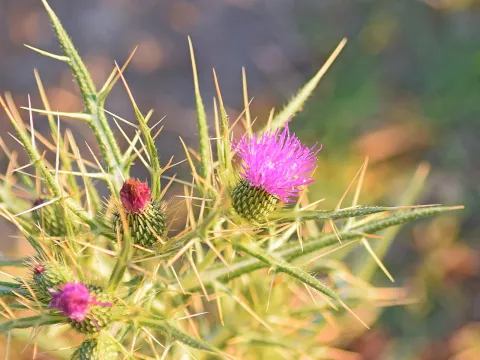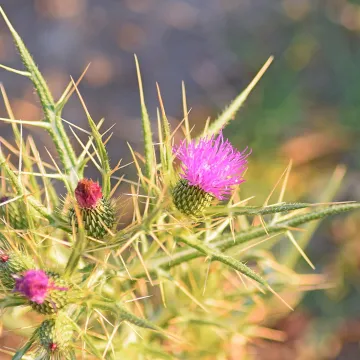
Italian thistle
Cirsium italicum
Description
Italian thistle (Cirsium italicum) is a herbaceous perennial plant classified within the Asteraceae family. Known for its robust growth and adaptive survival strategies, it is frequently studied in agricultural science as a significant weed species that poses challenges to crop productivity in Mediterranean-type climates.
The plant originates from the Southern European region and is widely distributed throughout the Mediterranean basin. Its natural habitat includes open meadows, hillsides, and disturbed soils. Because of its broad environmental tolerance, it has successfully established itself in various ecosystems, effectively outcompeting native vegetation when soil nutrients are abundant and competition from other plants is low.
Botanically, this species is characterized by its prickly, deeply lobed leaves and sturdy stems that grow vertically. The floral structures, which are typical of the genus, consist of terminal heads with purple or pink florets. The plant is well-adapted to anemochory, meaning its seeds are light and equipped with specialized hairs (pappus), allowing them to travel vast distances via wind currents.
From an agrotechnical perspective, Italian thistle requires well-drained, nutrient-rich soils to thrive. It is relatively drought-tolerant once established but struggles in waterlogged environments. Field management requires intensive techniques such as systematic tilling, which disrupts root development, and the application of herbicides aimed at the rosette stage to prevent the plant from reaching reproductive maturity.
Economically, while often viewed as a nuisance, the plant provides support for local pollinator populations during its peak flowering season. However, in terms of pest and disease, it is susceptible to various fungal pathogens, such as downy mildew and rust, as well as specific aphid infestations that can spread to adjacent agricultural crops, necessitating careful monitoring in integrated pest management programs.
Photo gallery