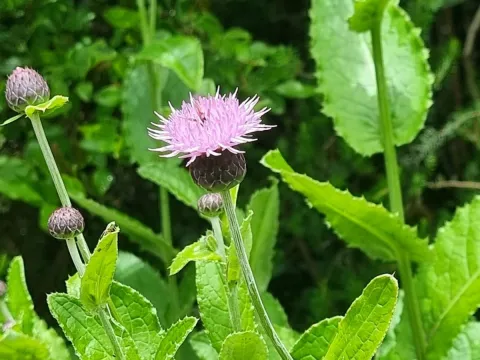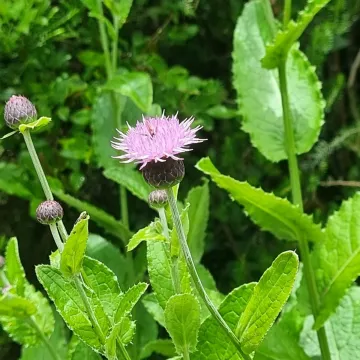
Broad-leaved thistle
Cirsium latifolium
Description
The broad-leaved thistle (Cirsium latifolium) is a perennial herbaceous plant belonging to the Asteraceae family. In an agricultural context, it is predominantly categorized as a persistent and difficult-to-control weed that utilizes both seed dispersal and extensive vegetative root systems to colonize productive farmland and compete with crops for light, water, and nutrients.
Originating and thriving across various temperate regions of Eurasia, this species is highly adaptable to diverse soil types, though it shows a preference for moist, nutrient-rich habitats. It is commonly found in agricultural fields, pastures, and disturbed land areas. Its ability to survive in various climates makes it a significant challenge for farmers practicing conventional tillage methods.
Botanically, Cirsium latifolium is characterized by sturdy, upright stems adorned with broad, spiny leaves. Its root system is exceptionally robust, consisting of a deep taproot combined with horizontal creeping roots capable of regenerating new shoots from small fragments left in the soil after mechanical weeding. The plant produces purple flower heads that develop into wind-dispersed seeds, facilitating long-distance propagation.
Agronomic management of this species requires a multifaceted approach. Because of its deep root architecture, simple surface cultivation is often ineffective and can even promote spread. Integrated pest management (IPM) strategies typically involve the strategic use of systemic herbicides applied at the rosette stage, combined with aggressive crop rotation using fast-growing cover crops that provide shade and suppress thistle germination.
While often viewed solely as a nuisance, the broad-leaved thistle serves an ecological function as a nectar-rich resource for various pollinators, including honeybees and butterflies. Common pests and diseases that affect the thistle include thistle aphids and various rust fungi (Puccinia species). However, in high-production agricultural settings, these biological controls are rarely sufficient to prevent the weed from impacting crop yields.
Photo gallery