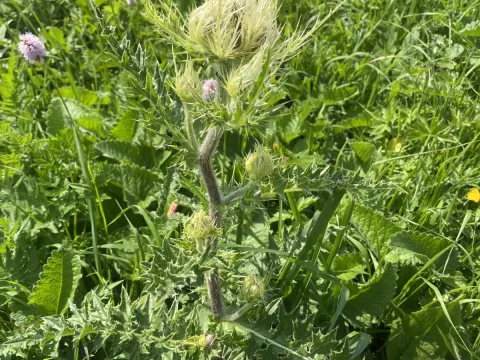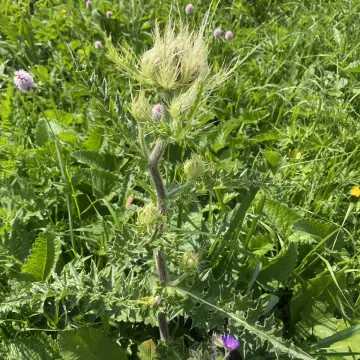
Cirsium obvallatum
Cirsium obvallatum
Description
Cirsium obvallatum is a perennial herbaceous plant belonging to the Asteraceae family. While often categorized as a wild species, its agricultural potential is recognized in sustainable farming systems due to its high biomass production and resilience in challenging environmental conditions.
The native range of this plant extends across the Caucasian mountain systems, where it thrives in subalpine zones. This geographical origin dictates its strong climatic adaptation, allowing it to withstand significant temperature fluctuations and mountainous soil structures, making it a viable candidate for diversification in temperate agricultural zones.
Botanically, Cirsium obvallatum is characterized by a robust, upright stem and foliage equipped with spines for defensive purposes. The inflorescence is unique, featuring bracts that envelop the flower heads, providing protection against extreme weather and herbivores. The root system is deep and expansive, contributing to soil structural integrity.
Cultivation requirements favor well-drained, nutrient-rich soils with sufficient light exposure. Agronomic practices for this crop include proper seedbed preparation and moderate density management to minimize self-shading. It is largely drought-tolerant once established and does not require intensive chemical management if maintained in a balanced ecosystem.
The plant is highly valued by beekeepers as a prolific melliferous source, providing high-quality nectar. Furthermore, researchers are investigating its utility in phytoremediation and as a source of phytochemical compounds. Disease management focuses primarily on preventing root fungal infections through proper drainage, while pest control targets specific beetles that may impact flower development.
Photo gallery