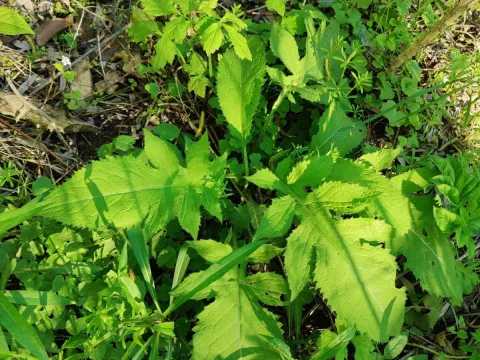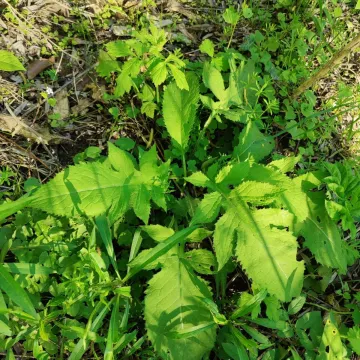
Cabbage thistle
Cirsium oleraceum
Description
Cabbage thistle (Cirsium oleraceum) is a perennial herbaceous plant belonging to the Asteraceae family. Often overlooked as a weed, it serves as a valuable forage plant in moist meadows and has historical significance as a wild vegetable in various European culinary traditions.
The plant is native to Europe and Western Siberia, flourishing in damp habitats such as riverbanks, fens, and shaded woodland edges. Its adaptability to high soil moisture levels makes it a resilient choice for wetlands that are otherwise challenging to manage for traditional grain or row crops.
Botanically, Cirsium oleraceum is distinguished by its relatively soft, serrated leaves and pale yellowish-green flower heads. Unlike other thistles, its spines are soft and non-threatening, which significantly improves its palatability for livestock compared to other more aggressive thistle species.
From an agronomic perspective, the crop requires nutrient-rich, moist soils to reach its full potential. While it does not demand heavy investment in pesticides or complex tillage, maintaining soil pH near neutral levels is beneficial. Irrigation is rarely necessary unless the local climate experiences severe summer drought.
The primary economic use of this plant is as a supplement in forage production. Additionally, the young shoots and leaves are sometimes harvested for human consumption, as they are rich in minerals and vitamins. It is generally resistant to common crop pests, although proper field monitoring for aphids and fungal pathogens remains standard practice.
Photo gallery