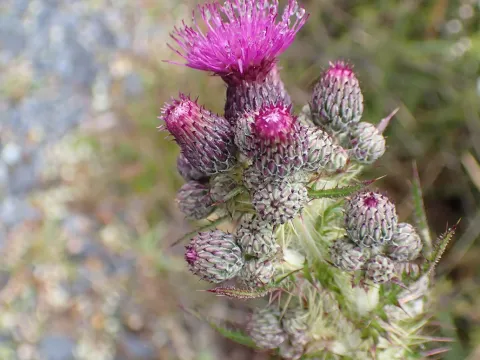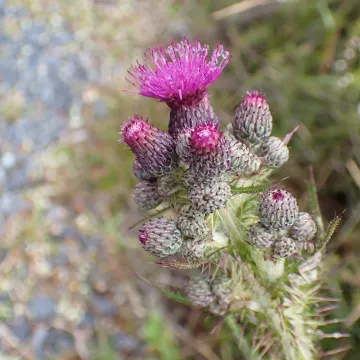
Marsh thistle
Cirsium palustre (L.) Scop.
Description
Marsh thistle (Cirsium palustre) is a biennial herbaceous plant belonging to the Asteraceae family. Unlike other thistles that prefer dry habitats, this species is specifically adapted to wet and marshy conditions, often found in fens, damp meadows, and near water bodies.
The native range of this species covers most of Europe and parts of Western Asia. In agriculture, it is often considered a problematic weed in permanent pastures and wet grasslands, where its thorny structure makes forage harvesting difficult and reduces the grazing capacity of the land.
Botanically, the plant features a tall, erect stem that can grow up to 150 cm in height. Its leaves are deeply pinnatifid with sharp spines. The flowers are arranged in dense purple-to-pink clusters, which are highly attractive to bees and butterflies, providing a significant nectar source.
Marsh thistle thrives in moisture-retentive, slightly acidic soils. Effective management involves improving soil drainage, which makes the environment less suitable for the plant. Additionally, regular mowing before the flowering stage prevents seed dispersal, which is the primary method of reproduction for this species.
While not a cultivated crop, marsh thistle serves as a vital component of wetland biodiversity. It is susceptible to various pathogens such as rust fungi (Puccinia species) and can be affected by stem-boring insects, which sometimes act as natural biocontrol agents in wild populations.
Photo gallery