Pannonic thistle
Cirsium pannonicum
Description
The Pannonic thistle (Cirsium pannonicum) is a perennial herbaceous plant belonging to the Asteraceae family. Unlike many other invasive members of the Cirsium genus, this species is appreciated for its ecological stability and specific niche requirements. It is a robust plant that has adapted to thrive in stable, well-drained habitats across Central and Eastern Europe.
The natural range of Cirsium pannonicum is centered in the European continent, where it typically inhabits dry meadows, forest edges, and areas with calcareous soils. Due to its adaptation to xerothermic conditions, it is a plant of high interest for conservation biology and specialized permaculture projects that aim to restore natural biodiversity.
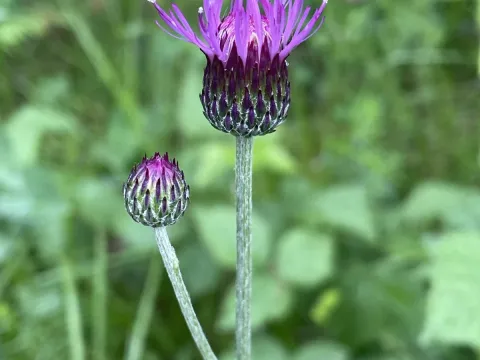
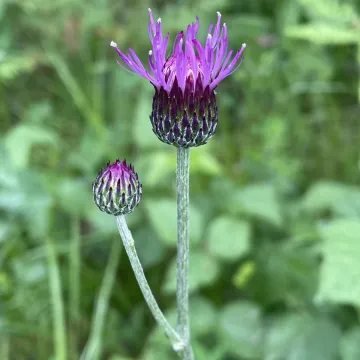
Botanically, the species is distinguished by its simple, often entire or sparsely toothed leaves and singular, dense flower heads with purple-pink florets. The plant typically reaches a height between 30 and 80 cm. Its growth habit is relatively slow in the first year, focusing on the development of a strong root system before producing flowering stems in subsequent seasons.
Regarding agronomic requirements, the Pannonic thistle necessitates well-drained, nutrient-poor to moderately fertile soil with a slightly alkaline pH. It is highly sensitive to waterlogging, which can cause crown rot. Cultivation practices should focus on maintaining adequate spacing and ensuring the plant receives full sunlight to encourage vigorous flowering and nectar production.
In terms of хозяйственное (economic) utility, this thistle is highly regarded as an exceptional honey plant, attracting a diverse array of pollinators. While not a conventional agricultural crop, it is increasingly used in biodiversity-focused landscaping and as an ornamental component in xeriscaping. Common pests include various weevils that target the flower buds, while fungal diseases can be mitigated by ensuring proper air circulation around the plants.
Photo gallery