
Pendulous thistle
Cirsium pendulum
Description
The pendulous thistle, scientifically known as Cirsium pendulum, is a robust herbaceous perennial belonging to the Asteraceae family. While typically perceived by farmers as a challenging weed due to its aggressive growth, it remains an essential component of the diverse flora in the East Asian region.
This species is native to temperate parts of East Asia, including the Russian Far East, Japan, Korea, and China. It thrives in various habitats such as meadows, forest fringes, and wetlands. Its natural adaptability allows it to colonize disturbed soils and neglected fields, making it a common sight in transition zones.
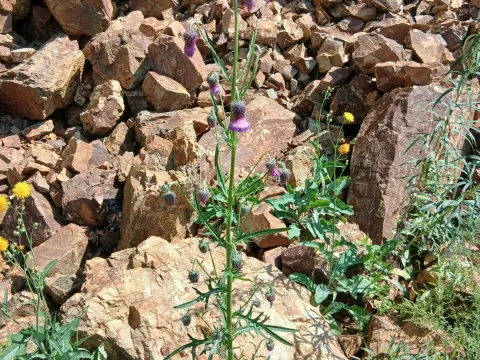
Botanically, Cirsium pendulum is distinguished by its height, which can reach up to two meters, and its deeply lobed leaves armed with prickly spines. The specific epithet "pendulum" refers to the drooping flower heads, which are pink to purple in color and provide a distinct silhouette compared to other thistle species.
Agricultural management of this plant requires a comprehensive strategy. It is known to compete with crops for light, nutrients, and water. Effective control involves a combination of mechanical destruction of the root systems in the early stages and the application of chemical control agents if the infestation levels exceed economic thresholds during the season.
From an ecological perspective, the pendulous thistle is a valuable honey source, supporting a wide range of pollinators during the late summer season. It also plays a role in soil stabilization due to its deep taproot system, which helps prevent erosion in sloping terrains or along riverbanks where the plant establishes itself naturally.
- Family: Asteraceae
- Native Range: East Asia
- Growth habit: Perennial herb
- Key feature: Drooping flower heads
Photo gallery