Elk thistle
Cirsium scariosum
Description
Elk thistle (Cirsium scariosum) is a perennial herbaceous plant belonging to the Asteraceae family. In an agricultural context, it is typically recognized as a wild plant species that can become invasive in overgrazed pastures and disturbed soil environments, requiring specific monitoring and management protocols.
The native distribution of this plant is centered in the mountainous regions of Western North America. It thrives in high-altitude environments and diverse temperate climates, showing an exceptional ability to colonize exposed slopes and alpine meadows where other plant species struggle to establish due to harsh thermal fluctuations.
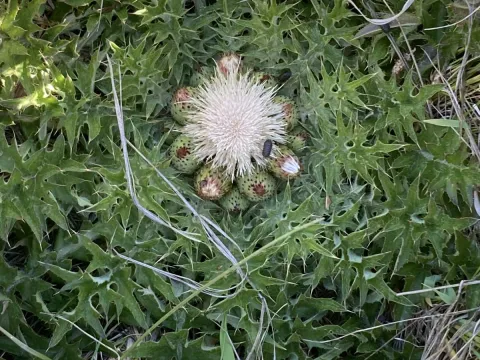
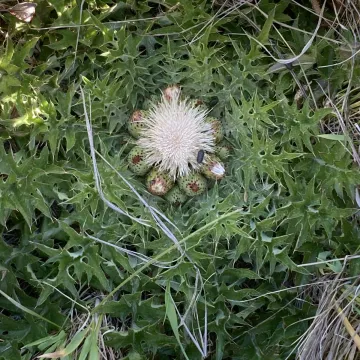
From a botanical perspective, Cirsium scariosum is distinguished by its acaulescent or short-stemmed growth habit, where a large, prickly rosette forms at ground level. The flowering heads are clustered at the center, often surrounded by specialized involucral bracts with papery (scarious) margins. Its deep taproot system ensures survival through long, dry summer seasons.
Agro-technical requirements for this plant are virtually non-existent as it is not a commercial crop; however, its management is critical for pasture health. It prefers well-drained, nutrient-poor, or disturbed soils. Controlling this weed requires integrated strategies, including the use of competitive perennial grasses and targeted chemical applications to weaken the resilient taproot system.
Economic and ecological utility is largely tied to its role as a pollinator resource for bees and butterflies. Common pests affecting the plant include seed-head weevils and aphids, while fungal pathogens like white rusts are frequently observed in high-humidity areas, impacting the overall vitality of the thistle population during the growing cycle.
- Family: Asteraceae
- Plant type: Perennial
- Root system: Taproot
- Distribution: Western North America
- Common name: Elk thistle
Photo gallery