Spiny thistle
Cirsium spinosissimum
Description
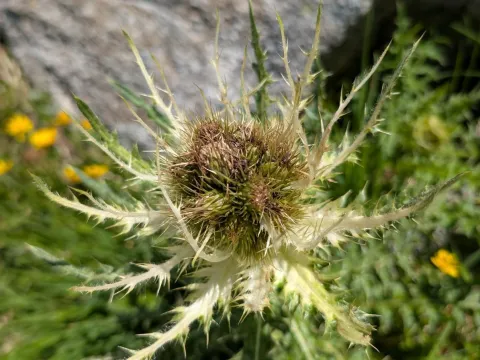
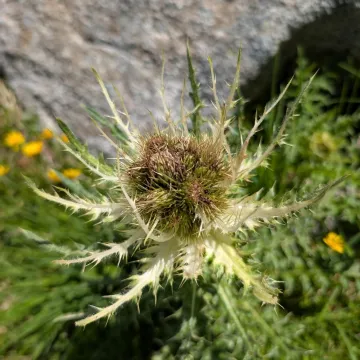
The spiny thistle (lat. Cirsium spinosissimum) is a perennial herbaceous plant belonging to the Asteraceae family. It is a distinctive high-altitude species known for its dense protective spines and robust structure. In its natural alpine habitat, it serves as a critical component of mountain meadow ecosystems, often thriving in areas where few other plants can survive.
Originating from the European mountain ranges, particularly the Alps, this species is well-adapted to alpine and subalpine climate zones. Its natural distribution is characterized by high-altitude meadows that experience short, intense growing seasons, cool temperatures, and high exposure to solar radiation. It is a resilient plant capable of colonizing nutrient-rich, moist soils.
Botanically, Cirsium spinosissimum is defined by its stout, leafy stem and dense, pale yellow or cream-colored spiny bracts that conceal the flowers. Unlike some of its relatives, the plant grows in a compact form, which helps protect its reproductive structures from the harsh, windy conditions found at high elevations. Its deep root system allows it to stabilize soil effectively on mountain slopes.
Cultivation of this plant requires conditions that mirror its natural mountain environment. Key requirements include well-drained, nutrient-rich, and slightly moist soil. While it is hardy in cool climates, the plant demands significant sunlight to thrive. Effective cultivation techniques emphasize maintaining soil aeration and preventing waterlogging, which is essential for healthy root development.
The agricultural and economic utility of the spiny thistle is limited, but it is studied for its ecological significance as a soil stabilizer and a floral resource for alpine pollinators. Typical diseases include rust fungi and powdery mildew, which can affect the foliage in humid conditions. Pests generally include various aphids and coleoptera species that have evolved to overcome the plant's formidable mechanical defenses.
Photo gallery