Cliffortia linearifolia
Cliffortia linearifolia
Description
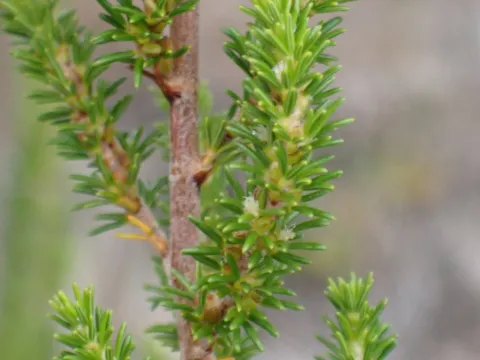
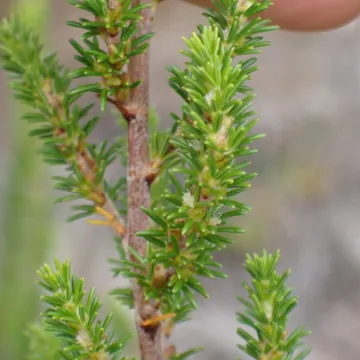
Cliffortia linearifolia is a distinctive evergreen shrub belonging to the Rosaceae family. Despite its botanical classification, it lacks the typical appearance of roses or apples, instead displaying a fine-textured, needle-like foliage that makes it easily mistaken for a conifer or a heath plant in the landscape.
Native to the southern regions of South Africa, this species is naturally adapted to the harsh, wind-swept slopes and rocky soils of the Cape Floristic Region. The plant thrives in areas characterized by a Mediterranean climate, where it benefits from cool, wet winters and dry, sunny summers, reflecting its evolutionary resilience.
Botanically, the plant is characterized by its long, narrow, and leathery leaves, which are structurally designed to minimize transpiration. The flowers are small, yellowish or brownish in hue, and lack showy petals, as the species relies on anemophily—pollination by wind—to facilitate its reproductive cycle throughout the growing season.
In terms of agricultural and horticultural requirements, Cliffortia linearifolia demands excellent soil drainage and full sun exposure. It is highly intolerant of waterlogged conditions, which can quickly lead to root decay. Gardeners should avoid over-fertilization, as this species is adapted to thrive in nutrient-poor, acidic or neutral soils, mirroring its natural wild habitat.
The primary use of this culture is in ornamental landscaping, where it is prized for its year-round structural interest and textural contrast. While relatively robust, the plant can be susceptible to common pests such as aphids or scale insects if stressed by drought or poor ventilation. Maintaining a balanced environment with sufficient airflow is crucial for long-term health.
Photo gallery