Cliffortia ruscifolia
Cliffortia ruscifolia
Description
Cliffortia ruscifolia is a resilient evergreen shrub belonging to the Rosaceae family. Despite its taxonomic classification within the rose family, it lacks the typical floral showiness of its relatives, having instead evolved a specialized foliage structure that mimics the appearance of butcher’s broom, thus gaining its botanical name.
Native to the Cape Floristic Region of South Africa, the plant is a hallmark species of the fynbos biome. It has evolved to thrive in environments characterized by mild, wet winters and dry, scorching summers. Its natural distribution is largely restricted to mountainous slopes and sandy plains where vegetation must endure significant environmental stress.
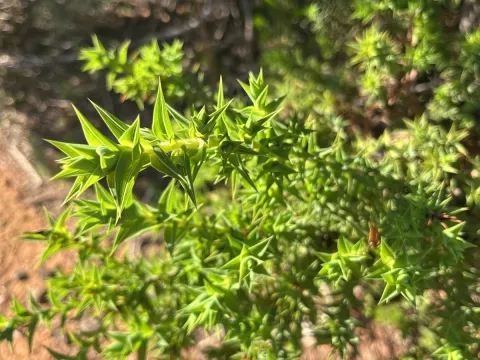
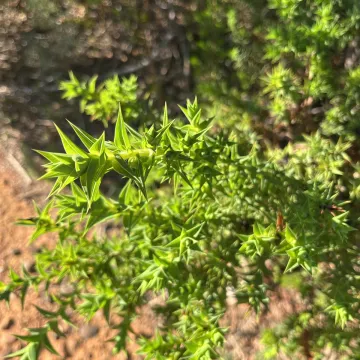
The botanical architecture of Cliffortia ruscifolia features stiff, coriaceous leaves that are notably pointed, serving as a defensive mechanism against herbivores and an adaptation to reduce transpiration. The plant produces inconspicuous flowers, which are typically wind-pollinated, reflecting its adaptation to open, windy landscapes. The root system is extensive, allowing it to tap into deep soil moisture.
Cultivation demands a strictly Mediterranean or similar climate. The most critical aspect of its care is the provision of exceptionally well-draining soil; heavy, clay-based substrates will inevitably lead to root failure. It requires full sun exposure to maintain its compact, dense habit. In terms of fertilizers, the plant prefers low-nutrient conditions and does not require intensive feeding regimes.
The primary use of this species is in drought-tolerant landscaping and xeriscaping. It provides excellent texture and structural interest to garden designs, particularly in regions where water conservation is prioritized. Maintenance involves periodic pruning to keep the shrub in shape and constant vigilance against common horticultural pests and diseases, such as fungal pathogens that thrive if the substrate remains waterlogged.
Photo gallery