Spurge olive
Cneorum tricoccon
Description
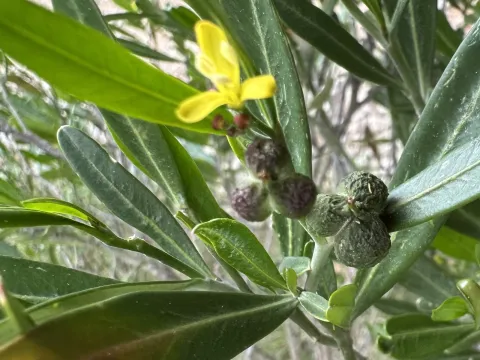
Spurge olive (Cneorum tricoccon) is a unique evergreen shrub belonging to the Rutaceae family. It is recognized for its dense, compact growth habit and tough, leathery leaves that allow it to thrive in harsh environments. As a perennial plant, it maintains its lush appearance throughout the year, making it a reliable choice for Mediterranean-style landscaping.
Native to the western Mediterranean, this species naturally grows in regions such as Spain, France, and Italy, particularly on rocky coastal slopes. Due to its origin, the plant has evolved to withstand high levels of sun exposure and periods of low rainfall, making it highly drought-tolerant once established in the landscape.
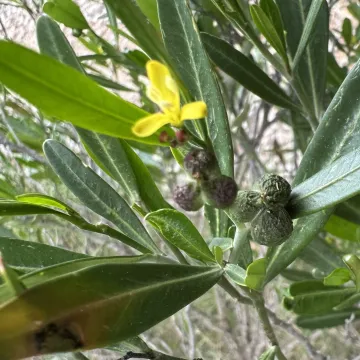
Botanically, the plant is distinguished by its small yellow flowers and unique fruit structure. The name "tricoccon" refers to the three-lobed fruit that develops after flowering. These fruits turn dark brown as they mature, adding a subtle visual interest to the shrub during the later stages of the growing season.
Regarding soil and climatic requirements, the Spurge olive demands well-drained, porous soil, often thriving in calcareous or limestone-based substrates. It is not tolerant of waterlogged soils, which can quickly lead to root rot. While it enjoys a warm, sunny climate, young plants may require moderate protection during exceptionally cold snaps to ensure survival.
The primary horticultural use of this shrub is in ornamental garden design, particularly for xeriscaping and coastal gardens. It is highly valued for its low-maintenance nature and its ability to withstand salty sea breezes. Generally, the plant is resistant to many common pests and diseases, provided that the basic requirements for drainage and light are strictly met.
- Excellent drought resistance.
- Low nutritional requirements.
- Suitable for topiary or natural hedges.
- Ideal for rock gardens and Mediterranean xeriscapes.
Photo gallery