Texas bull-nettle
Cnidoscolus texanus
Description
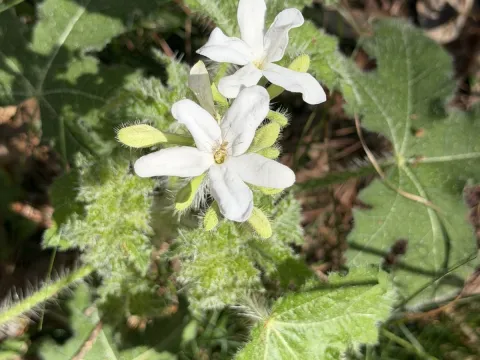
Texas bull-nettle (Cnidoscolus texanus) is a perennial herbaceous plant belonging to the Euphorbiaceae family. It is widely recognized for its stinging hairs that cover the stems and foliage, which provide a significant defense against herbivory and can cause intense skin irritation upon contact.
The plant is native to the southeastern regions of the United States, particularly within the state of Texas and parts of northern Mexico. It thrives in well-drained, sandy soils and is commonly found in prairies, open woodlands, and disturbed habitats. Its natural adaptation to hot and dry environments allows it to survive in regions where water scarcity is a frequent occurrence.
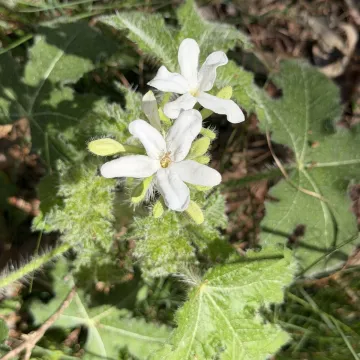
Botanically, the species is characterized by its deep tuberous root system, which acts as a nutrient reserve, allowing it to recover quickly after top growth is lost. The leaves are palmately lobed, and the plant produces white, fragrant flowers that typically bloom during the spring and summer months. The presence of milky latex, a hallmark of the spurge family, is consistent throughout the entire plant structure.
Cultivation requirements for this species are relatively specific, emphasizing the need for full solar exposure and exceptionally porous soil. It is a drought-tolerant species that requires minimal intervention once established, but it is highly susceptible to root rot if soil moisture remains consistently high. Propagation is usually achieved through seeds, which require specific temperature cycles to break dormancy effectively.
- Requires full sun for optimal growth.
- Prefers well-draining, sandy, or rocky soil types.
- Requires minimal irrigation once mature.
- Needs protection from over-fertilization.
In terms of economic and research utility, the plant is studied for its potential chemical properties and its role in local biodiversity. While it is rarely grown as a conventional agricultural crop due to its stinging nature, it remains an important subject for ecological restoration projects and botanical studies focused on native North American flora.
Photo gallery