Codium fragile
Codium fragile
Description
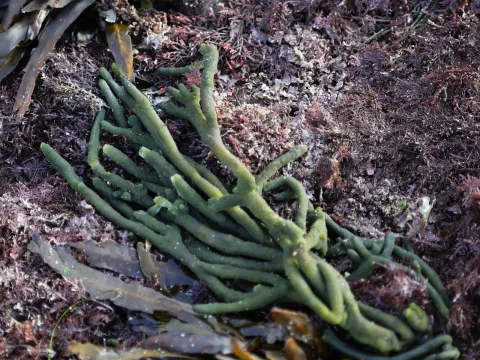
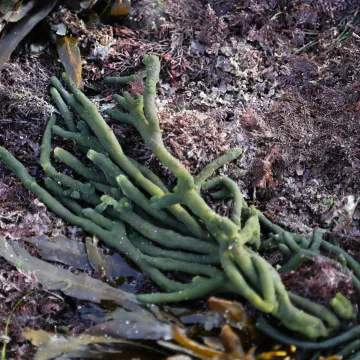
Codium fragile, commonly known as Dead Man's Fingers, is a distinct species of green macroalgae belonging to the family Codiaceae. It is recognized by its sponge-like, soft, and velvet-textured thallus that branches in a dichotomous pattern. As an economically significant alga, it has become a subject of interest in commercial aquaculture due to its rapid growth rate and high biomass production.
Originally native to the Pacific Ocean, specifically near Japan and Korea, this species has successfully colonized coastal waters globally, including the Atlantic and Mediterranean regions. Its ability to tolerate varying environmental conditions makes it a resilient crop for marine farms. The plant prefers temperate climates and is often found in the intertidal zone, attached firmly to rocky substrates by a base known as a holdfast.
From a botanical standpoint, the alga is composed of a complex network of non-septate siphons. This structural organization allows for efficient nutrient transport throughout the plant body. The species is highly adaptive to light intensity changes, which is a critical feature for successful offshore farming, as it can thrive at varying depths depending on water clarity and nutrient availability.
Regarding its cultivation and maintenance, success relies on the following factors:
- Water temperature stability within the 10–22°C range.
- High water quality with consistent nutrient flow (nitrates and phosphates).
- Substrate preparation using ropes or nets to facilitate attachment.
- Regular harvesting cycles to promote vegetative regeneration.
The industrial usage of Codium fragile spans across food production, where it is consumed raw or processed into various snacks, and the pharmaceutical industry, where its extracts are utilized for their antiviral and anticoagulant properties. While generally hardy, the crop can suffer from infestations of sea urchins and grazing mollusks, which can devastate large farm segments if not monitored with integrated pest management techniques.
Photo gallery