Asian snakewood
Colubrina asiatica
Description
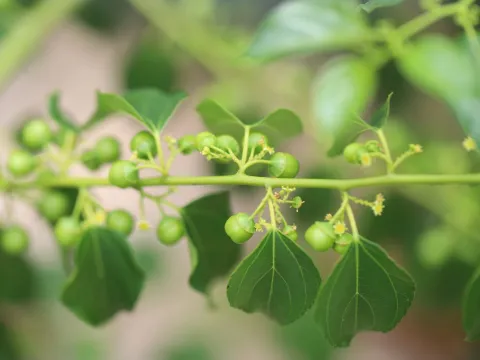
Asian snakewood (Colubrina asiatica) is a sprawling, evergreen shrub species belonging to the Rhamnaceae family. It is widely recognized for its high adaptability to coastal environments, often forming dense thickets that serve as a critical component of tropical shoreline vegetation across various maritime regions.
The native range of the plant spans the tropical areas of the Indian and Pacific Oceans. From Southeast Asia to the coasts of Northern Australia and the Pacific Islands, the species has successfully established itself as a primary colonizer of sandy beaches, dunes, and rocky coastal areas, displaying remarkable resilience to extreme salt exposure.
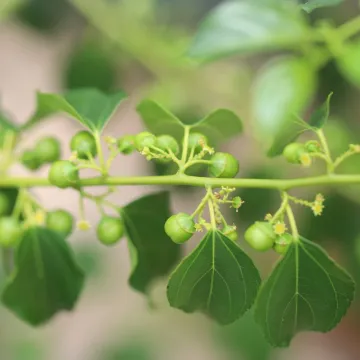
The morphology of the plant includes glossy, ovate leaves and small, greenish-yellow flowers. The fruits are dehiscent capsules containing buoyant seeds. These seeds are specifically evolved to float on seawater for extended periods, which allows the species to propagate across vast distances between islands and continents.
Regarding climate and soil, Colubrina asiatica requires a strictly frost-free tropical climate. It thrives in sandy, well-draining soils with minimal nutrient requirements. Cultivation in non-native environments is generally discouraged due to its potential for invasiveness, but in its natural habitat, it requires full sun exposure and consistent humidity to maintain its growth cycles.
In terms of хозяйственное (economic) utility, the plant is primarily valued for coastal stabilization. Its extensive root network makes it an effective tool for soil erosion control on dunes and shorelines. While some traditional medicinal practices utilize the foliage for its purported antiseptic properties, its primary contemporary significance remains ecological, serving as a buffer against storm surges and shoreline degradation.
- Excellent tolerance to saline spray
- Significant invasive potential in non-native regions
- Effective natural barrier for coastal erosion
- Low soil fertility requirement
Photo gallery