Condalia hookeri
Condalia hookeri
Description
Condalia hookeri, commonly known as Brazilian bluewood, is a perennial evergreen shrub or small tree belonging to the Rhamnaceae family. This species is highly valued in its native habitats for its robust growth habit and survival strategies in harsh, dry environmental conditions.
The origin of this culture traces back to the arid regions of North America, particularly across southern Texas and northern Mexico. It thrives in diverse environments, ranging from rocky hillsides to brushy plains, showcasing an exceptional ability to dominate in environments with limited water availability.
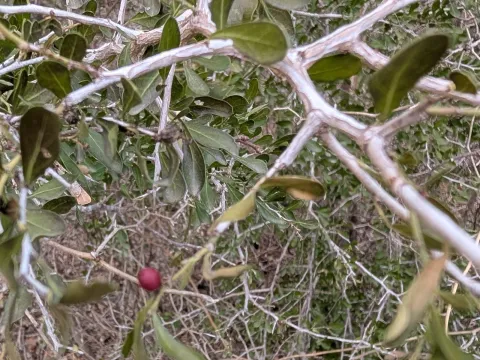
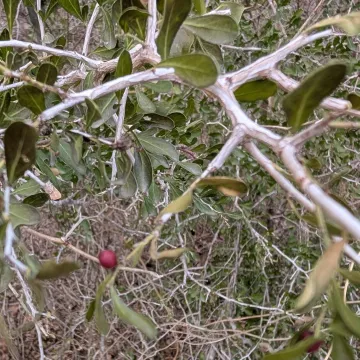
Botanically, the plant is characterized by a dense, thorny structure which serves as an effective defense against herbivores. Its leaves are small, leathery, and dark green, while the fruit manifests as small, rounded drupes that turn black upon maturity, providing a significant food source for local wildlife.
Agronomic requirements for Condalia hookeri include well-drained soils, ideally with a limestone or alkaline profile. Once established, the plant exhibits extreme drought tolerance, requiring little to no supplemental irrigation. It is essential to ensure full sun exposure to maintain the density of the shrub and prevent physiological stress.
The agricultural and environmental use of the species is primarily focused on soil conservation and the establishment of xeriscaped barriers. While the fruit is edible, its economic utility is currently minor compared to its ecological importance in preventing erosion and supporting biodiversity in arid ecosystems.
- Significant drought and heat tolerance.
- Natural barrier properties due to thorny branches.
- High compatibility with alkaline and rocky soils.
- Essential role in supporting local avian and small mammal populations.
Photo gallery