Spatulate condalia
Condalia spathulata
Description
Spatulate condalia (lat. Condalia spathulata) is a perennial shrub species belonging to the Buckthorn family (Rhamnaceae). This hardy plant is highly adapted to extreme arid environments and plays a critical role in maintaining the structure of desert and shrubland ecosystems.
The species is native to the southwestern United States, primarily in Texas and New Mexico, as well as northern Mexico. It typically thrives in rocky substrates, limestone soils, and along dry creek beds, demonstrating a remarkable ability to survive in environments with high heat and very low annual rainfall.
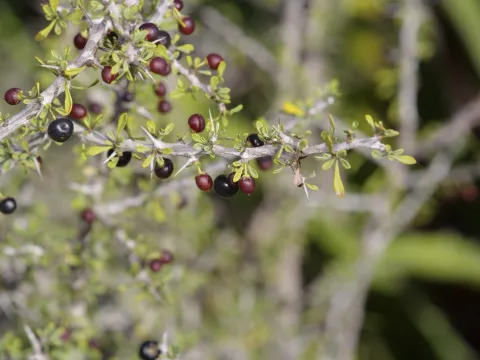
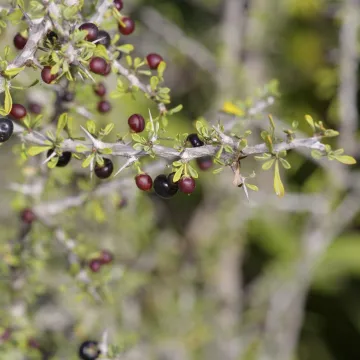
Botanically, Condalia spathulata is characterized by its stiff, thorny branches and small, spatulate leaves that often grow in clusters. These thorns serve as a defense mechanism against browsing animals. The flowers are small and greenish-yellow, while the fruit is a small, fleshy drupe that attracts local fauna.
Cultivation of this species requires well-draining, calcareous soils and full sun exposure. It is an excellent candidate for xeriscaping and ecological restoration projects. While it is rarely cultivated as a commercial crop, its propagation is achieved primarily through seeds, which require specific conditions for germination to mimic natural cycles.
Economically, the plant is valued for land reclamation, soil stabilization, and providing shelter and food for wildlife. It is highly resistant to most pests and diseases common to desert environments, requiring almost no chemical intervention. Its resilience makes it an important focus for research into sustainable plant growth in changing climates.
Photo gallery