Echeveria multicaulis
Echeveria multicaulis Rose
Description
Echeveria multicaulis, often referred to as copper roses, is a perennial succulent species belonging to the Crassulaceae family. Unlike the typical rosette-forming Echeveria species, this plant is characterized by its woody, branching stems, which give it a unique shrub-like appearance. It is a prized specimen for succulent enthusiasts and professional growers alike.
The plant originates from the mountainous regions of Mexico. Adapted to rocky environments, it thrives in well-draining, nutrient-poor soils and high-intensity sunlight. Its evolutionary background makes it highly resistant to drought, as it stores water in its fleshy, thickened leaves, a primary survival mechanism in its native habitat.
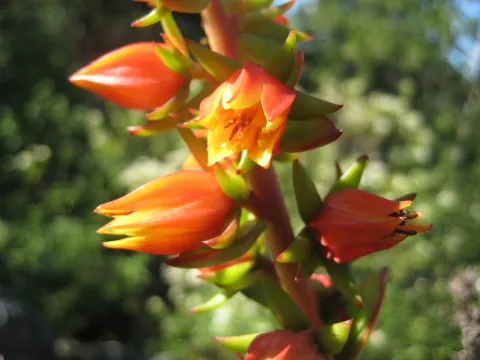
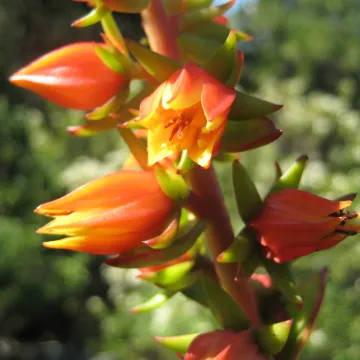
Botanically, Echeveria multicaulis features reddish-tinted leaf edges, providing the characteristic metallic look that justifies its common name. The leaves are organized in small clusters at the ends of the stems. During the blooming season, the plant produces slender inflorescences with small, bell-shaped flowers that display a striking yellow and red color palette.
In terms of agricultural management, success depends on mimicking its arid native environment. Use a high-quality, fast-draining potting mix specifically designed for cacti and succulents. During the summer, ensure the plant receives at least 6 hours of bright light daily. Watering should be infrequent but thorough, ensuring that the soil dries out completely between waterings to prevent root rot.
- Ideal temperature: 18–24°C; winter rest required at cooler temperatures.
- Propagation: Easily grown from stem cuttings or individual leaves.
- Soil requirements: Sandy, grit-based substrate with excellent aeration.
- Common pests: Mealybugs, aphids, and root mealybugs.
The economic value of this crop lies in the ornamental plant industry. Echeveria multicaulis is widely used in landscape design, indoor xeriscaping, and as an essential component in miniature gardens and terrariums. Due to its slow growth habit and unique aesthetic appeal, it remains a stable and sought-after commodity in specialized gardening markets.
Photo gallery