Corallocarpus bainesii
Corallocarpus bainesii
Description
Corallocarpus bainesii is an intriguing species within the Cucurbitaceae family, known for its unique succulent characteristics. Unlike typical vine-like members of this family, this plant is defined by its substantial caudex, a thickened stem base that serves as a reservoir for water and nutrients, allowing the plant to persist in harsh arid environments.
The plant originates from the arid regions of Southern and Eastern Africa, where it has evolved to thrive in drought-prone landscapes. Its habitat is characterized by unpredictable rainfall patterns and high solar radiation. In agricultural and botanical research, it is studied for its extreme survival mechanisms, which provide insights into developing more resilient crops for arid climates.
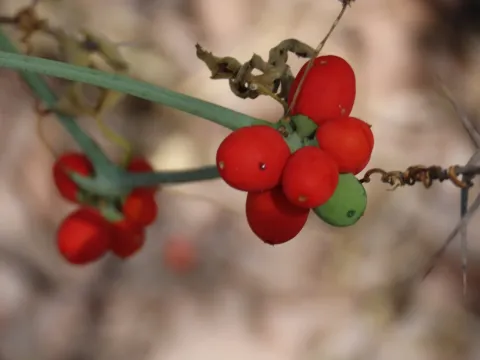
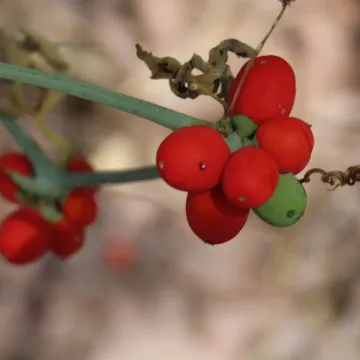
Botanically, the plant features a hard, woody caudex that can become quite large with age. During the active growing season, it produces slender, climbing or trailing stems with textured leaves that help minimize water loss. The plant is monoecious, producing small, inconspicuous flowers followed by small fruits, which are essential for its natural propagation cycle.
To cultivate Corallocarpus bainesii effectively, strict attention to soil drainage is paramount. A mineral-rich, porous potting mix is required to prevent root rot. During the growing season, it requires bright, indirect light and periodic, measured watering. However, it is strictly necessary to allow the plant to enter a dormant phase during the winter, where water is almost completely withheld to prevent decay.
Common phytosanitary concerns include infestation by spider mites and mealybugs, particularly when kept in greenhouse environments. Diseases are primarily related to fungal pathogens caused by improper drainage or poor air circulation. While not a large-scale agricultural commodity, it holds significant value in botanical collections, scientific research, and specialized ornamental nursery industries due to its rare biological traits.
Photo gallery