
Cortaderia atacamensis
Cortaderia atacamensis
Description
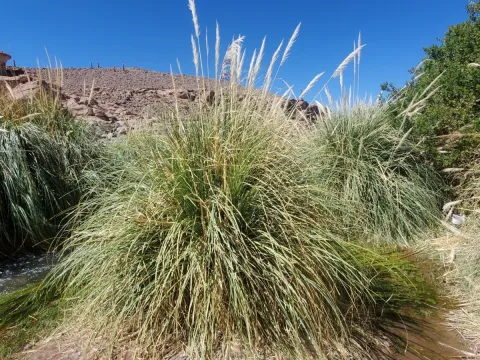
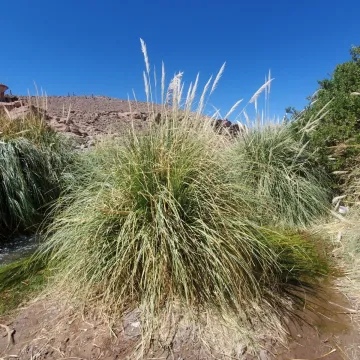
Cortaderia atacamensis is a perennial grass species belonging to the family Poaceae. As a distinctive member of the pampas grass group, it is highly valued for its striking architectural form and elegant, feathery plumes. While it is primarily classified as an ornamental plant in modern agriculture, its biological traits reveal an extraordinary resilience typical of highland arid flora.
The plant originates from the high-altitude, arid regions of South America, specifically near the Atacama Desert. Its natural habitat is defined by rocky slopes, intense solar radiation, and limited precipitation. Through evolutionary processes, this species has developed a deep root system and structural adaptations that allow it to thrive in nutrient-poor, sandy, and stony soils where many other plants fail to survive.
Botanically, this grass forms dense, robust clumps consisting of sharp-edged, elongated leaves. During the blooming season, it produces large, silvery-white or pinkish inflorescences that rise significantly above the foliage. These plumes are durable and often persist throughout the winter, providing structural interest even in colder months, provided the environment remains relatively dry.
Agricultural and gardening requirements for this species focus on providing a site with excellent drainage and full sun exposure. It is highly drought-tolerant once established but benefits from occasional deep watering during extreme drought in the growing season. The main agrotechnical tasks include spring cleanup, where the previous year's dead foliage is cut back to allow new growth, and ensuring the crown is not submerged in water, which is the most critical risk for the plant.
The primary use of Cortaderia atacamensis is in landscaping as an ornamental feature, often used for windbreaks or as focal points in large gardens. While generally robust, the plant can be susceptible to spider mites and aphids during periods of high heat. Fungal issues, such as root rot, may occur if the soil structure does not provide adequate drainage. Proper spacing and airflow between plants are essential to mitigate these biological threats.
Photo gallery