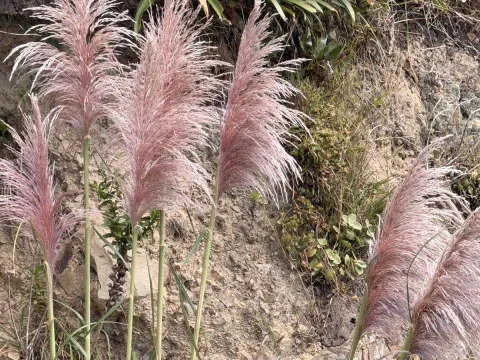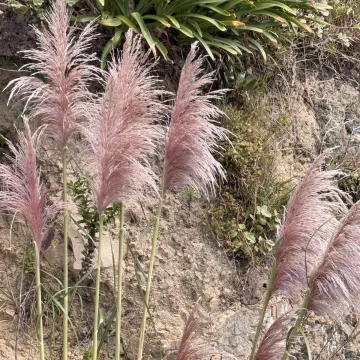
Andean pampas grass
Cortaderia jubata
Description
Andean pampas grass (Cortaderia jubata) is a perennial grass species belonging to the Poaceae family. Known for its impressive, feathery plumes, it serves as a structural element in landscaping. Unlike the common Cortaderia selloana, this species displays prominent, pinkish-purple inflorescences that transition to silver as they mature, adding a unique aesthetic appeal to large-scale garden compositions.
The species is native to the Andean regions of South America, specifically in Bolivia, Ecuador, and Peru. It thrives in open, high-altitude environments. While highly valued as an ornamental in many regions, it is categorized as an aggressive invasive species in several countries due to its ability to produce vast amounts of wind-dispersed seeds and its resilience in various habitats.
Botanically, Cortaderia jubata is characterized by tall, arching leaf blades with serrated margins, which are notably sharp. The plant forms a massive, dense mound that can persist for many years. It is an obligate outcrosser and produces seed apomictically, which allows for rapid colonization of disturbed soil surfaces if left unmanaged in favorable climates.
The cultivation requirements focus on full sun exposure and well-draining soil. It is relatively drought-tolerant once established but performs best when moisture is available during the spring growth flush. Because it is prone to crown rot, ensuring that water drains away from the base of the plant during winter is critical. It does not tolerate prolonged frost and requires protection in cold climates.
Its primary use is in landscape architecture for its visual height and texture. Key maintenance practices include:
- Annual pruning of dead foliage in early spring to encourage new growth.
- Applying balanced fertilizers before the onset of the flowering season.
- Maintaining adequate spacing to ensure proper air circulation.
- Wearing protective gear to avoid skin irritation from the sharp leaf blades.
Regarding health issues, the plant is susceptible to fungal diseases like rust and leaf spot, typically exacerbated by poor ventilation or high humidity. Pests such as aphids and spider mites may infest the plant during hot, dry spells. Regular inspection and maintaining good plant vigor are the best defenses against these common agricultural threats.
Photo gallery