Cannonball tree
Couroupita guianensis
Description
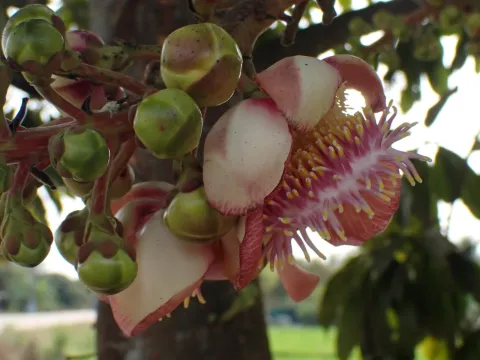
The Cannonball tree (Couroupita guianensis) is a distinctive tropical tree belonging to the Lecythidaceae family. It is globally recognized for its remarkable fruit, which resembles large, heavy cannonballs, and its striking, fragrant flowers that bloom directly on the bark of the trunk, a phenomenon known as cauliflory.
Native to the rainforests of South America, specifically the Amazon basin, this species has been introduced into tropical regions worldwide, including Southeast Asia and the Caribbean. It thrives in humid, frost-free climates and requires high temperatures throughout the year to maintain its vigorous growth and reproductive cycle.
From a botanical perspective, the tree is a masterpiece of evolution. Its flowers are highly specialized for pollination by bees and bats, while the large woody fruits contain numerous seeds embedded in a gelatinous, aromatic pulp. The tree can reach significant heights, requiring ample space for full canopy development.
Agricultural success depends on providing deep, nutrient-rich soils with excellent drainage. While it is hardy in its native environment, the tree requires consistent moisture. During early development, protection from high winds is essential to prevent structural damage, and standard agronomic practices include balanced fertilization and regular soil monitoring.
- Nutritional use: consumption of fruit pulp in local cuisines
- Medicinal applications: research into antimicrobial properties
- Ornamental value: widely planted in botanical gardens
- Maintenance: pruning and pest management
The primary agricultural challenge involves managing fungal pathogens that target the roots, especially in overly saturated soils. Pests such as beetles and caterpillars may cause foliage damage, but with careful site selection and preventive cultural practices, the tree remains a resilient and productive species in tropical agroforestry systems.
Photo gallery