
Couroupita nicaraguarensis
Couroupita nicaraguarensis
Description
Couroupita nicaraguarensis is an impressive evergreen tree belonging to the Lecythidaceae family. As a distinct member of its genus, it shares biological characteristics with the famous Cannonball tree, serving as a significant botanical specimen in tropical regions across the globe.
The origin of this species is traced back to Central American tropical forests, particularly those found in Nicaragua and nearby territories. The range of cultivation is strictly restricted to tropical zones. It requires a humid, frost-free climate to survive and flourish, making it impossible to grow outdoors in temperate regions without controlled environmental systems.
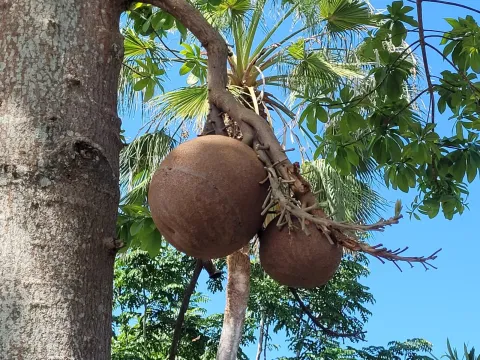
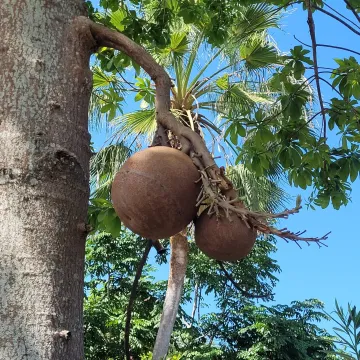
Botanically, the species is recognized for its striking cauliflory, where large, fragrant flowers sprout directly from the woody trunk. The leaves are thick, leathery, and dark green. The fruit is a large, woody, spherical capsule that resembles a cannonball, containing seeds protected by a gelatinous pulp, which is a characteristic feature of this plant family.
Regarding agrotechnical requirements, the plant demands consistent warmth, ideally above 20°C, and high humidity levels. The soil must be well-drained, nutrient-rich, and loamy. Young trees require partial shade to prevent leaf scorching, while mature specimens can tolerate more direct exposure. Proper aeration is crucial for the root system to prevent common rot-related issues.
In terms of usage, the plant is primarily cultivated for its ornamental value in botanical gardens and large private tropical landscapes. Some local communities utilize the woody shells of the fruits for crafts or decorative purposes. Common health issues include root rot caused by poor drainage and susceptibility to specific tropical scale insects or leaf-mining pests that require integrated pest management.
- Needs high temperatures and consistent moisture.
- Requires well-drained, fertile soil compositions.
- Ideal for tropical botanical conservatory displays.
- Sensitive to low-temperature exposure and drought.
Photo gallery