Cratoxylum cochinchinense
Cratoxylum cochinchinense
Description
Cratoxylum cochinchinense, commonly known in some regions as pink mempat, is a notable tree species belonging to the Hypericaceae family. It is a perennial woody plant widely recognized for its robust nature and capability to thrive in various tropical environments. In its native habitat, it can develop into a substantial tree, significantly contributing to the local forest biomass.
The origin of this species is traced to Southeast Asia, where it is found across countries like Vietnam, Thailand, and Malaysia. It primarily occupies areas within tropical forests, often being one of the first species to colonize secondary forest land. This environmental adaptability allows it to flourish in diverse ecological zones ranging from lowland forests to more elevated, hilly terrains.
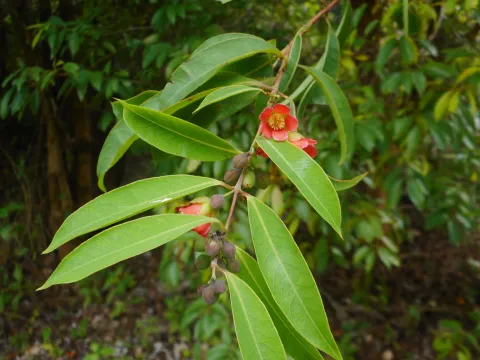
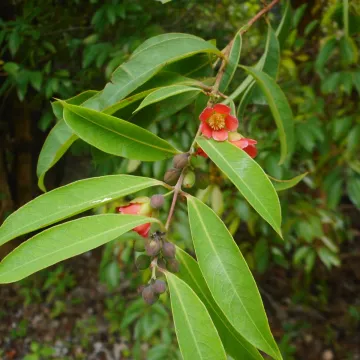
Botanically, the tree is characterized by its distinct opposite leaves and beautiful pinkish-to-white flowers that emerge in clusters. Its growth pattern is generally upright, and the bark provides a unique aesthetic, often peeling in layers. The tree's biological efficiency is underscored by its ability to maintain physiological activity even during moderate dry spells, thanks to its deep root architecture.
When considering agronomic practices, Cratoxylum cochinchinense requires well-drained, acidic to slightly neutral soils to reach its full potential. While it is hardy, young plantations benefit from weed control and protection from excessive herbivory. In plantation settings, a regular spacing of 3 to 4 meters between trees is often recommended to ensure sufficient light penetration and proper canopy development.
Regarding its utility, the species is primarily valued for its durable and high-quality timber. The wood is commonly employed in fine carpentry, furniture manufacturing, and structural construction due to its resistance to environmental decay. Furthermore, the tree is frequently used in reforestation projects aimed at restoring degraded tropical landscapes, serving both an economic and ecological purpose.
- High timber density and structural durability
- Excellent species for reforestation programs
- Adaptive to various soil nutrient profiles
- Significant aesthetic value in park landscapes
Photo gallery