Crownvetch
Coronilla varia L.
Description
Crownvetch (Coronilla varia L.) is a perennial leguminous plant belonging to the Fabaceae family. It is widely recognized for its extensive root system and its ability to thrive in poor soils, making it a critical component for ecological restoration and agricultural land management.
Originally native to parts of Europe, the Middle East, and Asia, crownvetch has been introduced globally, particularly in North America, for its remarkable ability to stabilize steep embankments. Its adaptability to diverse climates and soil types has established it as a staple in erosion control programs.
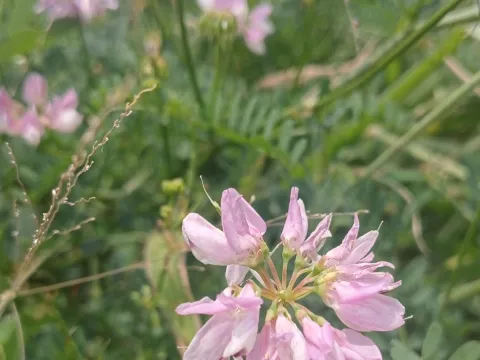
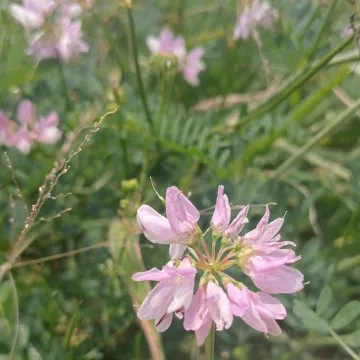
Botanically, crownvetch is characterized by a trailing, sprawling growth habit, often reaching lengths of up to one meter. The foliage consists of pinnately compound leaves, and the plant produces clusters of pink, lavender, or white flowers that are highly attractive to pollinators. Its fruit is a slender, segmented legume pod.
Regarding agronomic requirements, crownvetch is drought-tolerant and thrives in full sun. While it can survive on infertile, rocky, or sandy substrates, it prefers well-drained soils. Establishment can be slow, often requiring careful weed management in the first season until the stand becomes fully established and dense.
The primary economic uses of crownvetch include soil stabilization, cover cropping, and supplemental forage for livestock. It is an excellent nitrogen fixer, which benefits subsequent crops in a rotation. While it has few major pests, growers should monitor for leaf-feeding beetles and potential fungal diseases in overly humid conditions.
- Excellent soil stabilizer.
- Nitrogen-fixing capabilities.
- Pollinator-friendly species.
- Low maintenance requirements.
Photo gallery