Cryptantha barnebyi
Cryptantha barnebyi
Description
Cryptantha barnebyi is a distinctive herbaceous plant belonging to the Boraginaceae family. Known for its restricted distribution, this species is classified as a rare endemic plant, capturing the attention of botanists specializing in North American desert vegetation and endangered flora conservation.
The native range of this species is confined to specific regions within Utah, USA. It thrives in specialized geological niches, predominantly found on steep rocky slopes and shale barrens. These environments are characterized by high solar radiation, nutrient-poor soil, and extreme aridity, to which the plant has adapted through millions of years of evolution.
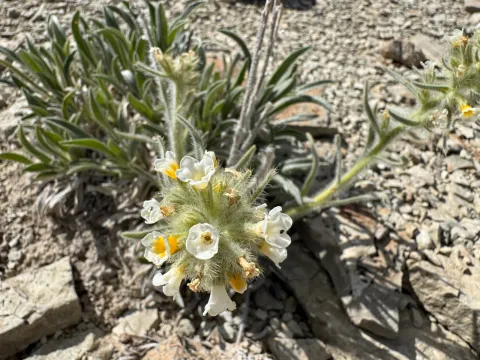
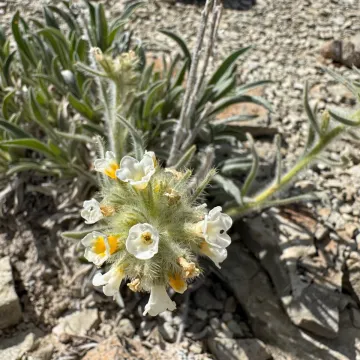
Botanically, the plant is recognized by its compact rosettes and dense vestiture of stiff hairs covering the foliage, a common trait in the Cryptantha genus that helps minimize transpiration. The inflorescences consist of small, white flowers that appear during the brief growing season, showcasing the intricate reproductive strategies typical of high-desert adapted species.
Cultural requirements for Cryptantha barnebyi are extremely demanding. It requires highly porous, alkaline soils with excellent drainage, as the species is highly sensitive to root rot and soil saturation. In a controlled or restoration setting, maintaining a precise moisture-temperature balance is crucial, as the plant cannot tolerate the organic-rich, water-retentive soils used in conventional horticulture.
While the species currently lacks agricultural or commercial utility, its study is vital for ecosystem management. Typical challenges for the plant in the wild include limited reproductive success and potential herbivory. In cultivation settings, it is susceptible to fungal pathogens like powdery mildew if air circulation is insufficient or humidity levels exceed the tolerance threshold of desert-adapted flora.
Photo gallery