Ribbed Cryptantha
Cryptantha costata
Description
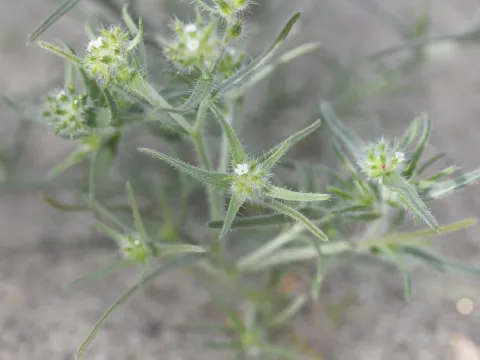
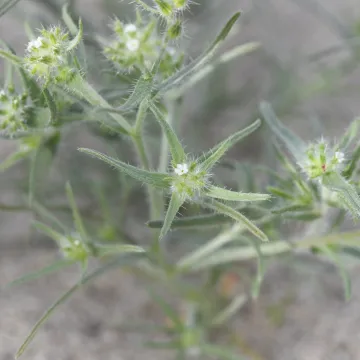
Ribbed Cryptantha (Cryptantha costata) is an annual herbaceous plant belonging to the Boraginaceae family. Known for its remarkable resilience in extreme environments, this species is a specialist of arid landscapes, perfectly adapted to survival in nutrient-poor and moisture-deficient substrates.
The plant originates from the desert regions of North America, particularly the Mojave Desert. It thrives in open, sandy, or gravelly soils where annual precipitation is minimal. Its distribution is closely linked to its ability to germinate, grow, and set seeds rapidly during the brief intervals when moisture is available in the desert floor.
The botanical profile of the plant includes narrow, densely hairy leaves and small, white flowers organized in scorpioid cymes, a signature trait of the family. The specific epithet costata refers to the ribbed morphology of the nutlets, which is the primary feature used by botanists to distinguish this species from other closely related members of the Cryptantha genus.
In terms of practical application, while not a conventional crop, this plant is increasingly recognized for its ecological utility in land reclamation. It serves as a biological soil stabilizer in disturbed desert environments, playing a critical role in preventing wind erosion and maintaining soil integrity in habitats vulnerable to degradation.
Regarding health and protection, the plant is susceptible to root pathogens if cultivated in non-native environments with high humidity. In its natural range, pests are rare, though it can be affected by drought-tolerant insects. Proper management in artificial propagation involves ensuring a well-draining mineral soil mix and avoiding excessive supplemental irrigation which mimics non-desert climates.
Photo gallery