Cryptantha flavoculata
Cryptantha flavoculata
Description
Cryptantha flavoculata is a herbaceous plant belonging to the Boraginaceae family. While not a conventional staple crop, it is recognized in botanical circles for its unique adaptation to harsh, arid environments, making it a subject of interest for specialized xerophytic cultivation and ecological restoration projects.
The native range of this species is confined to the western regions of the United States, including areas in Utah and Nevada. It typically thrives in rocky, well-drained soils characteristic of high-desert climates. Its evolutionary development has allowed it to survive in regions with minimal annual rainfall and significant temperature fluctuations.
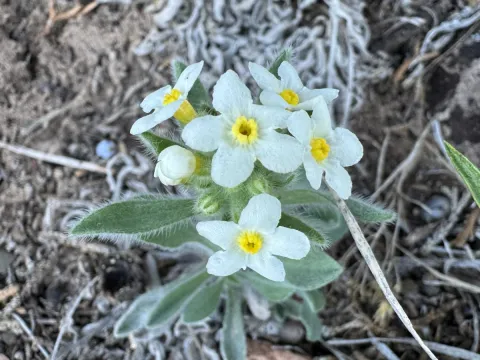
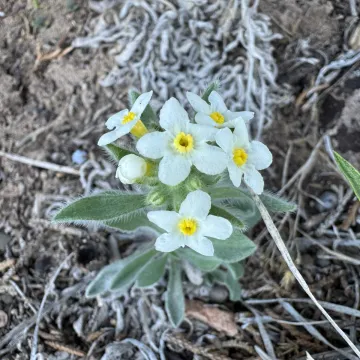
Botanically, the plant is characterized by its compact habit and heavily pubescent leaves, which serve as an adaptation to minimize water loss. The flowers are notable for their white petals and a distinct, vibrant yellow center, which provides the inspiration for its common and scientific naming. The root system is deep and efficient, optimized for nutrient uptake in nutrient-poor soils.
Cultivation requirements necessitate an environment that mimics its natural habitat. Key factors include high solar exposure, excellent drainage, and low-fertility soil. Producers must avoid waterlogging at all costs, as the root collar is highly susceptible to decay. Fertilizer applications should be kept to a bare minimum, as the plant is adapted to marginal soil conditions.
Potential agricultural uses are largely limited to niche landscaping and ecological conservation efforts aimed at stabilizing loose, dry soils. Typical diseases affecting the plant are primarily fungal-based, triggered by excessive soil moisture or poor air circulation. While resilient to many generalist pests, it may occasionally be targeted by insects specialized in feeding on native Boraginaceae.
Photo gallery