Cryptantha fulvocanescens
Cryptantha fulvocanescens
Description
Cryptantha fulvocanescens is a perennial herb belonging to the Boraginaceae family. This plant is well-regarded for its evolutionary adaptations that allow it to thrive in the harsh, arid conditions typical of its native range in western North America. It is a classic example of a xerophytic plant that survives in environments with extremely limited moisture availability.
The native habitat of this species spans across the high deserts and semi-arid plateau regions of the United States. It is commonly found on rocky, gravelly slopes and open plains. As a pioneer species in these ecosystems, it plays a vital role in stabilizing thin soils and maintaining ecological balance in regions characterized by severe water scarcity and high solar radiation.
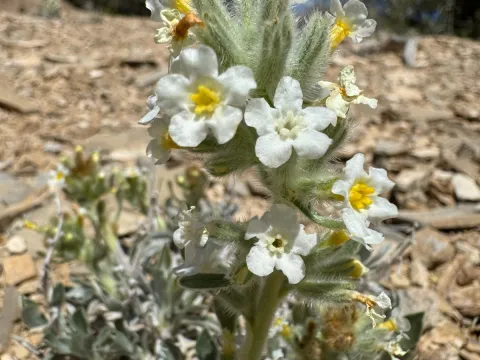
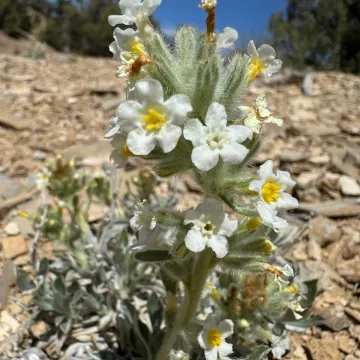
Botanically, Cryptantha fulvocanescens is defined by its distinctive vestiture—dense, coarse hairs that give it a tawny or grayish appearance. This pubescence serves as a crucial mechanism to reduce water loss through transpiration and protect the plant's tissues from intense sun exposure. Its small, white, five-petaled flowers appear in clusters, providing a brief but significant bloom period during the spring season.
Regarding agrotechnical requirements, the plant demands well-drained, nutrient-poor soil. Cultivation is strictly restricted to scenarios that mimic its native climate, such as rock gardens or xeriscaping. Key cultural practices include:
- Ensuring excellent drainage to prevent root rot.
- Maintaining high light exposure for optimal vigor.
- Avoiding excessive irrigation, as the species is intolerant to boggy soils.
- Providing minimal fertilizer, as native soil conditions are naturally low in nutrients.
While not a traditional food or fiber crop, its agricultural significance lies in sustainable landscaping and ecological restoration. It is highly valued for its low maintenance requirements and aesthetic appeal in water-wise garden designs. Typical plant health issues involve fungal infections resulting from humidity, while pest pressures are generally low, limited to specific desert insects that coexist with the plant in its natural range.
Photo gallery