Graham's catseye
Cryptantha grahamii
Description
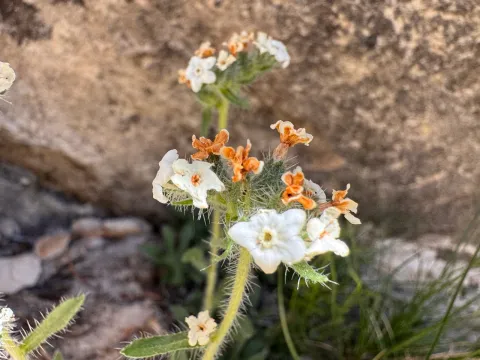
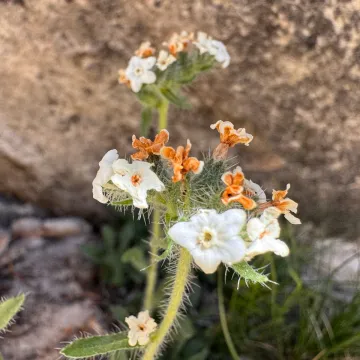
Graham's catseye (Cryptantha grahamii) is a specialized herbaceous perennial plant belonging to the Boraginaceae family. While not a conventional agricultural crop, it is a plant of significant scientific interest due to its specific ecological niche and status as a protected rare species.
The plant is endemic to the United States, specifically found in a very restricted range within the Green River Basin in Utah. It thrives in high-desert conditions, primarily inhabiting shale barrens where the geological substrate dictates the plant's ability to survive in otherwise harsh environments.
From a botanical standpoint, this species displays classic adaptations to arid environments. The plant is characterized by dense trichomes (hairs) covering its foliage, which minimize water loss. Its growth habit is typically low and compact, allowing it to withstand extreme temperature fluctuations and intense UV exposure characteristic of its high-elevation habitats.
Cultivation requirements for Cryptantha grahamii are extremely strict. It demands well-draining, rocky soil with very low nutrient content. It is highly intolerant of standard agricultural practices such as heavy fertilization or irrigation. The soil must mimic its natural shale environment; otherwise, the plant is susceptible to fungal infections and rapid root rot.
The primary utility of this plant is found in conservation science and botanical research. It is currently studied for its genetic resilience and adaptation to desertification. While it has no current commercial agricultural application, understanding its physiology provides valuable insights for developing drought-resistant vegetation for arid land restoration efforts.
- Family: Boraginaceae
- Native Habitat: Shale barrens, Utah, USA
- Growth Type: Perennial herbaceous
- Climate Adaptation: Xeric
- Conservation Status: Rare/Sensitive
Photo gallery