Cryptantha hispidula
Cryptantha hispidula
Description
Cryptantha hispidula is a herbaceous plant belonging to the Boraginaceae family. Known for its distinct bristly pubescence, this species serves as a fascinating example of plant adaptation to arid environments. Within the context of agricultural research, it is classified as a niche species with potential for specific restoration or xeriscaping projects.
The plant originates from the western regions of North America, where it thrives in semi-arid foothills and dry open plains. Its natural distribution is closely tied to specific ecological niches with high soil porosity. The ability of Cryptantha hispidula to withstand low-precipitation environments makes it a target of interest for agronomists looking for climate-resilient vegetation.
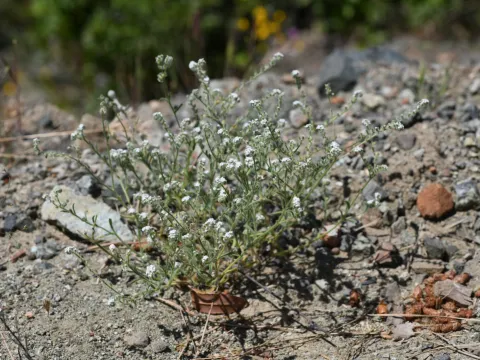
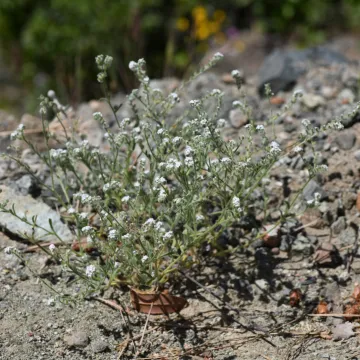
Botanically, the species is distinguished by its stiff hairs (bristles) covering the stems and foliage, which help reduce water loss through transpiration. The leaves are generally narrow, and the plant produces small, white flowers grouped in characteristic inflorescences. Its root architecture is designed for efficient water uptake in sparse and nutrient-poor, rocky substrates.
Regarding agrotechnical requirements, Cryptantha hispidula demands well-drained, sandy, or gravelly soils. It is highly intolerant of waterlogging, which often leads to root fungal issues. Success in cultivation depends on high solar exposure, as the species requires full sun to maintain structural integrity and promote healthy flowering cycles throughout the vegetative period.
The primary agricultural and economic use of this plant is found in land reclamation and bee forage programs in arid climates. As a hardy native species, it provides stability to soils susceptible to erosion. Typical pests and diseases include:
- Root rot pathogens triggered by poor drainage.
- Aphids during periods of moisture stress.
- Powdery mildew under high humidity conditions.
Photo gallery