
Canadian honewort
Cryptotaenia canadensis (L.) DC.
Description
Canadian honewort (Cryptotaenia canadensis) is a perennial herb belonging to the Apiaceae family. While it is often considered a wild plant, its culinary potential and distinct flavor profile make it an interesting addition to specialized herb gardens and permaculture systems.
The plant is native to North America and parts of East Asia, thriving primarily in moist, shaded woodlands and riparian zones. Its natural distribution suggests that it prefers environments where the soil remains cool and damp throughout the growing season, which is a critical factor for its successful cultivation.
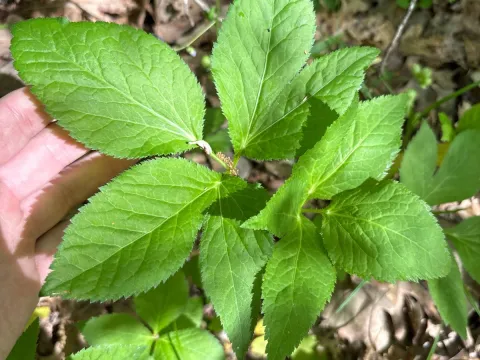
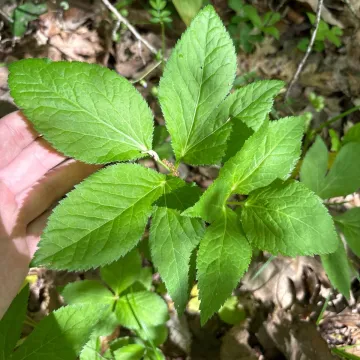
Botanically, Canadian honewort features compound leaves that are trifoliate with serrated margins, attached to long petioles. The plant typically reaches heights between 30 and 100 centimeters. During the reproductive phase, it produces small white flowers arranged in compound umbels, typical of the parsley family.
Cultivation requirements focus on mimicking its natural forest habitat. The soil should be rich in organic matter, loose, and consistently moist. It is a shade-tolerant species, making it an excellent candidate for forest gardening or growing under the canopy of larger shrubs. Avoiding direct midday sun is crucial to prevent the leaves from becoming bitter or scorched.
Agricultural management includes regular weeding, as the plant does not tolerate heavy competition during its establishment phase. Common issues include fungal leaf spot diseases and infestation by aphids or carrot rust fly larvae. In culinary applications, the leaves are valued for their distinct taste, which is often described as a blend of parsley, celery, and a subtle hint of ginger or nuts.
Photo gallery