Cuphea anagalloidea
Cuphea anagalloidea
Description
Cuphea anagalloidea is a distinct plant species belonging to the Lythraceae family. Unlike many terrestrial members of the genus Cuphea, which are often cultivated for their oil-rich seeds, this particular species is recognized for its semi-aquatic growth habit, allowing it to thrive in both moist soils and submerged environments.
The plant originates from the tropical regions of South America, specifically Brazil. In its natural habitat, it is found along the margins of freshwater streams and wetlands. This geographical adaptation allows the plant to flourish in environments with high rainfall and consistent tropical temperatures, where the substrate remains perpetually saturated with moisture.
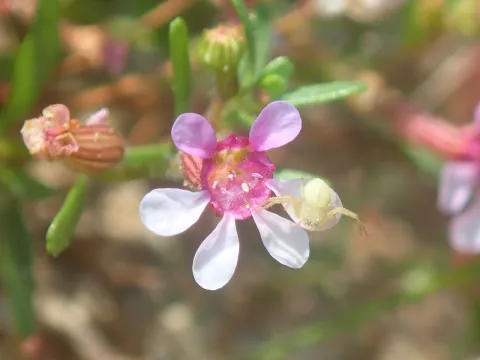
Botanically, this species is defined by its creeping, prostrate stems and small, opposite, elliptical leaves. The foliage exhibits significant color variation, shifting from vibrant greens to deep reddish-browns depending on light exposure. Its reproductive structures consist of small flowers nestled in leaf axils, which share the characteristic tubular morphology common to the Cuphea genus.
Cultivation requirements for Cuphea anagalloidea emphasize the need for a nutrient-rich, slightly acidic substrate and consistent environmental stability. Temperatures between 22°C and 28°C are optimal for growth. In aquatic or terrarium setups, the plant requires high light intensity to maintain its characteristic coloration and dense, compact growth pattern.
- Strict requirement for high-intensity lighting conditions.
- Preference for soft water with low mineral content.
- Sensitivity to sudden changes in substrate or water pH.
- Efficiency in vegetative propagation via stem cuttings.
The primary economic and horticultural utility of this species lies in aquascaping and specialized botanical displays. While not a conventional agricultural crop for mass production, it serves as a valuable specimen for paludariums and controlled environment agriculture. Common health issues include stunted growth due to insufficient light or nutrient deficiencies, and the occasional susceptibility to algal buildup on foliage if water quality is not maintained.
Photo gallery