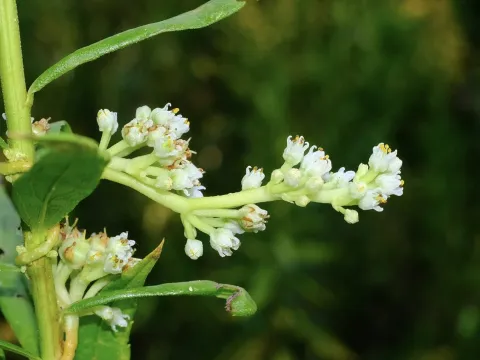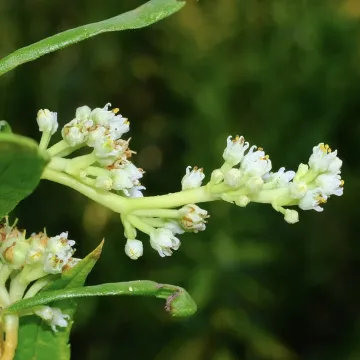
Hazel dodder
Cuscuta coryli
Description
Hazel dodder (Cuscuta coryli) is an obligate parasitic plant belonging to the Convolvulaceae family. Unlike conventional crops, it completely lacks chlorophyll and leaves, functioning as a parasite that draws water and nutrients from host plants through specialized structures called haustoria.
The species is native to North America, where it naturally inhabits various shrubs and herbaceous plants. Due to its adaptability and the longevity of its seeds in the soil, it has become a recognized quarantine pest in many regions, capable of spreading rapidly through contaminated agricultural products.
Botanically, the plant consists of thin, thread-like stems that coil around the host. Without true roots, it relies entirely on the haustoria that penetrate the epidermis and vascular bundles of the host plant. This parasitic relationship causes significant physiological stress, stunting the growth and reducing the yield of the infested crops.
Regarding its requirements, Hazel dodder thrives wherever suitable hosts are present. It is relatively climate-independent within temperate zones. Agrotechnical management is notoriously difficult, as the parasite is physiologically integrated with the host, making selective chemical treatment a complex challenge for agronomists.
- Exceptional longevity of seeds in the seed bank.
- High reproductive capacity and dispersal potential.
- Transmission of plant viruses between hosts.
- Difficulties in mechanical eradication without crop loss.
In terms of economic impact, this species is highly detrimental to agriculture. Infestations lead to severe economic losses and require strict phytosanitary measures, including seed cleaning, site quarantine, and the use of resistant crop varieties or specific herbicide programs to manage the infestation early.
Photo gallery