Cabbage tree
Cussonia paniculata
Description
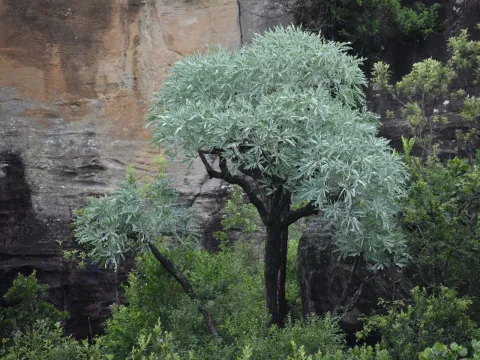
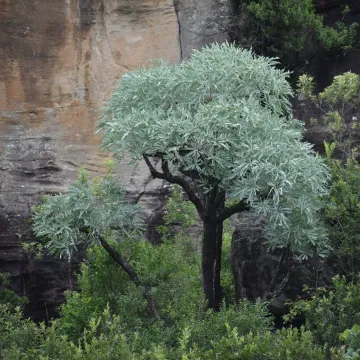
Cussonia paniculata, commonly known as the Cabbage tree, is a remarkable plant species belonging to the Araliaceae family. It is characterized by its distinct, succulent-like thick trunk and a crown of large, grey-green, compound leaves that resemble the foliage of a cabbage, which gives the plant its popular common name.
The plant originates from Southern Africa, where it naturally thrives in rocky outcrops and savanna regions. Its evolutionary history in arid environments has made it a robust plant capable of surviving periods of water scarcity, provided that the soil is sufficiently aerated and free-draining.
Botanically, it is classified as a small to medium-sized tree that can reach several meters in height. The inflorescences are dense, greenish, panicle-like clusters that appear periodically, followed by the development of dark purple berries, which are a valuable food source for local bird species in its native habitat.
In terms of agricultural and horticultural requirements, the plant demands full sun exposure and a well-structured, porous substrate. It is essential to ensure that the irrigation schedule mimics its natural cycle: moderate watering during the active growth season and a significant reduction in water during the dormant winter phase to prevent fungal infections.
When managing this crop, professional growers should be aware of several typical issues:
- spider mites during dry, hot weather;
- scale insects which can colonize the branches;
- root rot triggered by poor soil aeration or excess moisture.
Photo gallery