Cussonia sphaerocephala
Cussonia sphaerocephala
Description
Cussonia sphaerocephala is a notable woody plant belonging to the Araliaceae family, often recognized for its distinct sculptural silhouette. In agricultural and horticultural contexts, it is classified as a decorative tree prized for its aesthetic value in warm-climate landscapes. The plant displays significant structural beauty, making it a desirable specimen for botanical collections and large-scale gardening.
The plant originates from Southern Africa, thriving in savanna-like environments and woodland edges. Its natural habitat is defined by seasonal rainfall patterns and mild winter temperatures, which the species has adapted to over millennia. Understanding this native climate is essential for growers who wish to maintain healthy specimens outside of its natural distribution range.
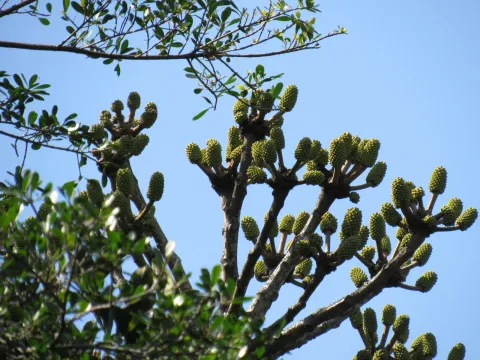
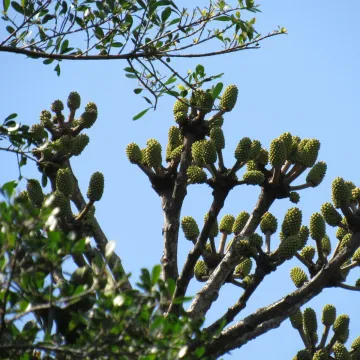
Botanically, this species is characterized by its palmately compound leaves and unique inflorescences that form dense, spherical clusters. The plant's growth habit is typically robust, with a thick trunk that serves as a reservoir for nutrients. These features not only define its visual appeal but also play a critical role in its survival strategy within competitive ecosystems, where it attracts various pollinators.
Agronomical requirements for successful growth center on well-draining soil and exposure to ample sunlight. The species is sensitive to waterlogged conditions, which can lead to rapid root decay, a common issue among members of the Araliaceae family. Providing a substrate with a slightly acidic profile, combined with strategic watering that mimics its natural growth cycles, ensures vigorous development and minimizes stress.
The primary utility of the culture lies in ornamental landscaping, where it serves as a focal point or a feature plant in xeriscaped gardens. Maintenance focuses on monitoring for typical pests like scale insects and mites, which can thrive in dense foliage. By maintaining proper spacing and air circulation, growers can significantly reduce the risk of fungal infections and maintain the plant's structural integrity over time.
Photo gallery