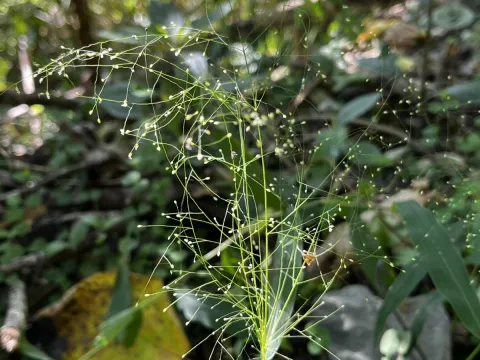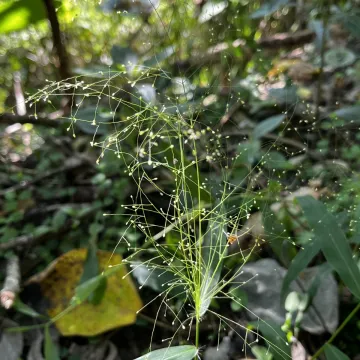
Cyrtococcum accrescens
Cyrtococcum accrescens
Description
Cyrtococcum accrescens is a perennial grass belonging to the Poaceae family. This species is recognized in tropical agriculture for its ability to form dense, creeping mats that effectively cover the soil surface. It is a vital component of natural pastures, appreciated for its resilience and the ease with which it colonizes various habitats within its native range.
The plant is native to the tropical regions of South and Southeast Asia and parts of the Pacific. It thrives in humid tropical climates, often found in light forests, along roadsides, and in disturbed areas. Due to its adaptation to varying light levels, it is frequently utilized in silvopastoral systems where it can grow effectively under partial shade conditions.
Botanically, Cyrtococcum accrescens is identified by its lanceolate leaves and branched panicle inflorescences. The stems are typically decumbent or ascending, rooting at the nodes, which facilitates its vegetative spread. Its root system is primarily fibrous and shallow, allowing for rapid absorption of nutrients and moisture from the topsoil during rainy seasons.
Regarding cultivation, the species prefers well-drained, fertile soils but displays significant tolerance to various environmental conditions. Agricultural management is centered on sustainable grazing practices to maintain the density of the sward. Minimal tillage is required, as the plant spreads primarily through stolons, making it a low-maintenance option for pasture improvement.
Its хозяйственное use and benefits include:
- Serving as a nutritious forage for ruminant livestock.
- Mitigating soil erosion in tropical agricultural landscapes.
- Contributing to the stabilization of slopes and embankments.
- Acting as a green cover to enhance soil biological activity.
Pests and diseases primarily include those commonly affecting tropical grasses, such as rust fungi and leaf blight pathogens. Poor drainage and excessive waterlogging are the main contributors to root decay. Effective management involves ensuring proper field drainage and avoiding overgrazing, which can leave the plant vulnerable to infestations and competitive weeds.
Photo gallery