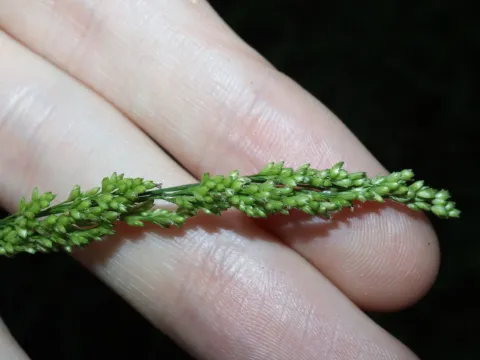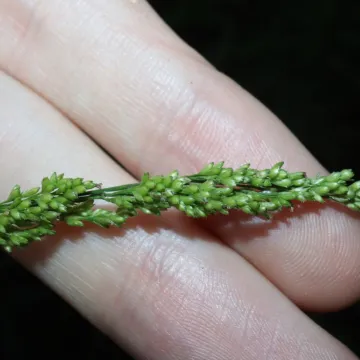

Cyrtococcum oxyphyllum
Cyrtococcum oxyphyllum
Description
Cyrtococcum oxyphyllum is a perennial grass species belonging to the Poaceae family. This plant is recognized as a significant component of tropical grassland ecosystems and serves as a valuable forage resource in various agricultural contexts across its native range.
Originating in Southeast Asia and parts of the Pacific, the species is well-adapted to warm, humid environments. It typically thrives in the understory of forests and on moist, open plains, demonstrating remarkable ecological flexibility in varying light and soil moisture conditions.
Botanically, this grass is characterized by its trailing or ascending stems that can easily root at the nodes, forming dense, protective mats over the soil surface. The leaves are typically lanceolate with a sharp tip, contributing to the plant's distinctive appearance within the grass family.
Cultivation requirements involve consistent soil moisture and well-drained, nutrient-rich substrates. As a tropical species, it requires stable temperatures and does not tolerate frost. Agricultural management should focus on maintaining humidity levels to ensure continuous vegetative growth throughout the warmer seasons.
In terms of agricultural utility, Cyrtococcum oxyphyllum is utilized primarily for grazing and as a source of green fodder for livestock. Its ability to regrow rapidly after defoliation makes it a sustainable choice for rotational grazing systems, while its creeping habit helps in stabilizing topsoil against erosion.
- Excellent soil cover capabilities
- High tolerance for partial shading
- Rapid vegetative recovery after grazing
- Potential for soil erosion control
Regarding health management, the plant is susceptible to fungal leaf spots under high-humidity conditions, which can be mitigated through proper spacing and management of site drainage. Monitoring for pests like small caterpillars and sap-sucking insects is essential for maintaining optimal biomass production.
Photo gallery