Derris trifoliata
Derris trifoliata Lour.
Description
Derris trifoliata is a perennial woody vine belonging to the Fabaceae family. This species is widely recognized for its unique adaptation to coastal environments, including mangrove forests, where it thrives in brackish water and high-salinity soil conditions that would be unsuitable for most conventional crops.
Originating from the tropical regions of Asia, Africa, and Australia, this plant is naturally distributed across coastal zones throughout the Indo-Pacific. It is a robust climber that uses trees or shrubs for structural support, often contributing to the dense vegetation layer of tidal swamp forests and river estuaries.
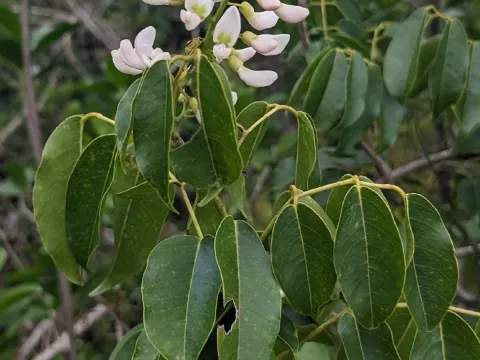
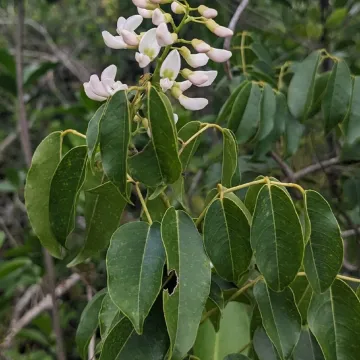
Botanically, the plant is characterized by its trifoliate leaves, which feature a glossy, leathery texture. The flowers are typically white or pinkish, organized in axillary racemes. The plant produces flat, pod-like fruits that are buoyant, facilitating dispersal via seawater, which is a key survival strategy in its native marine-influenced habitat.
Regarding its cultivation requirements, Derris trifoliata demands a warm, humid tropical climate with constant access to water. It exhibits a remarkable tolerance to salinity, making it an excellent candidate for planting in degraded coastal areas or saline wetlands. Agronomically, it requires minimal soil preparation provided that the moisture levels are consistent and humidity is maintained at high levels.
The primary economic value of this crop is derived from its roots and bark, which contain significant amounts of rotenone. This compound is a potent, naturally occurring botanical insecticide used historically to manage pests in organic farming. Beyond pest control, extracts from the plant are utilized in traditional medicine, although caution is advised due to the presence of active toxic constituents.
While the plant is hardy in its native habitat, it can still be susceptible to specific pests and pathogens. Common challenges include root rot caused by stagnant water in non-tidal environments and various tropical insect pests that feed on legumes. Effective management focuses on emulating its natural, slightly brackish, and highly humid environmental niche to ensure healthy plant development.
Photo gallery