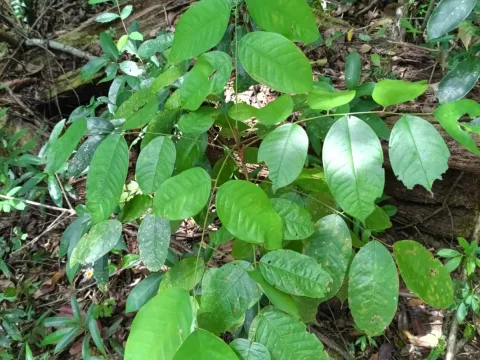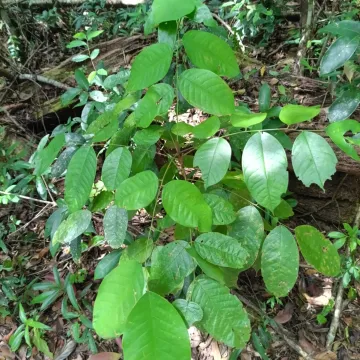
Dicorynia guianensis
Dicorynia guianensis Amshoff
Description
Dicorynia guianensis is a prominent tropical tree species belonging to the Fabaceae family. Known in the timber trade as Angelique or Basralocus, it is a majestic tree native to the northeastern regions of South America. It serves as a vital component of the lowland rainforest ecosystems in countries such as French Guiana, Suriname, and Brazil.
The species naturally thrives in tropical climates characterized by consistent high temperatures and significant annual rainfall. It is typically found in deep, alluvial, and moist soils. Because of its ecological requirements, the tree is highly adapted to tropical regions with high atmospheric humidity and is often seen in forests that experience periodic, localized flooding along riverbanks.
Botanically, Dicorynia guianensis can reach heights of up to 40 meters. It features pinnate leaves and distinctive legume-type fruit pods containing seeds. As a member of the legume family, it plays an important role in soil nutrient cycling. Its growth pattern is slow to moderate, making it a valuable subject for sustainable plantation management rather than rapid intensive agriculture.
Cultivation practices involve strict adherence to tropical forestry standards. Successful propagation requires nurseries with controlled moisture levels before transplanting into enriched, well-draining forest soils. While the species is resilient, young saplings are susceptible to specific fungal pathogens if the soil remains stagnant for too long, necessitating careful site selection.
The primary economic application of this tree is its high-quality timber. The wood is renowned for its exceptional density, hardness, and high resistance to marine borers and decay. Consequently, it is extensively used in heavy-duty construction, including bridge building, wharf decking, and other marine infrastructure projects where traditional woods might fail.
- Exceptional durability in marine environments
- High structural density
- Resistance to biological decay
- Significant timber export value
- Crucial for ecosystem restoration
Photo gallery