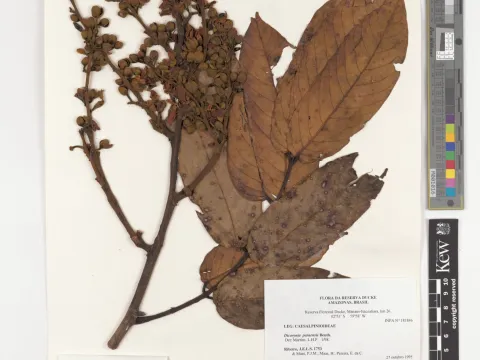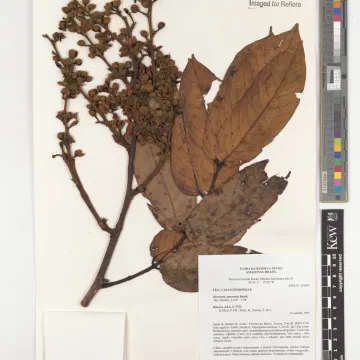

Dicorynia paraensis
Dicorynia paraensis Benth.
Description
Dicorynia paraensis, commonly known as Angelim, is a significant tropical hardwood species belonging to the Fabaceae family. This tree is native to the Amazon basin, where it plays a critical role in the composition and stability of the rainforest ecosystem.
The geographic range of this species extends across Brazil, French Guiana, and Suriname. It thrives in high-temperature, high-humidity environments, occupying diverse soil types within tropical forests, from lowland alluvial plains to more elevated terrain.
Botanically, the tree is characterized by its robust growth habit, complex leaves, and flowers typical of the Caesalpinioideae subfamily. It is recognized for its ability to compete for light within the forest canopy, showing relatively slow but steady growth rates that result in high-density wood.
Regarding cultivation, the species requires well-drained, acidic tropical soils. While it is primarily harvested from wild stands, silvicultural management practices focus on selective logging and the protection of juvenile trees to ensure the long-term sustainability of the population.
The wood of Dicorynia paraensis is highly prized for its physical and mechanical properties. It is extensively utilized in heavy-duty construction, including bridge building, sleepers, and high-traffic flooring, due to its exceptional resistance to fungal decay and insect attacks.
- High timber density and durability.
- Excellent resistance to moisture and pests.
- Key species for sustainable forestry.
- Used in demanding structural applications.
Photo gallery