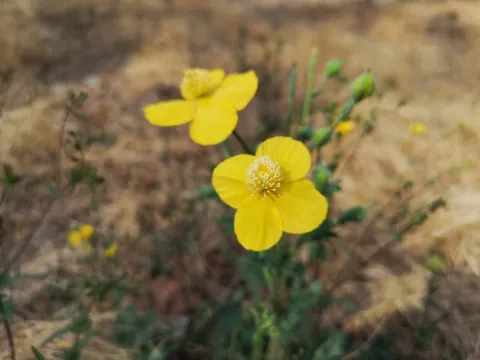
Dicranostigma leptopodum
Dicranostigma leptopodum
Description
Dicranostigma leptopodum is a perennial herbaceous plant belonging to the poppy family (Papaveraceae). Often noted for its distinct yellow-orange flowers and chemical composition, it is closely related to genera like Chelidonium. Its scientific significance primarily lies in its secondary metabolites, particularly alkaloids, which have garnered interest in pharmacological research for their potential therapeutic applications.
The origin of this species is traced to the mountainous regions of East Asia, primarily China. In its native habitat, it thrives in rocky, well-drained soils, which informs its requirements in cultivation. While not a widespread commercial crop, it is increasingly grown in specialized plots for botanical research and the extraction of bioactive compounds for medicinal purposes.
Botanically, the plant develops a taproot system and a basal rosette of deeply pinnate leaves. The flowering stems produce solitary, bright yellow-to-orange flowers with four petals, characteristic of the poppy family. The fruit is a long, slender capsule that dehisces at maturity to release tiny, numerous seeds. These seeds possess high viability, allowing for efficient propagation under controlled agricultural settings.
Agronomic requirements center on soil structure and water management. Dicranostigma leptopodum demands excellent drainage, as the roots are highly susceptible to rot when exposed to waterlogging. It thrives in sunny locations with well-aerated, neutral to slightly alkaline soil. Fertilization should be managed carefully, with a focus on phosphorus and potassium to encourage robust root development and alkaloid synthesis rather than excessive vegetative growth.
- Requires well-drained, porous soil for optimal root health.
- Prefers moderate temperatures and avoids extreme heat stress.
- High sensitivity to soil compaction and water stagnation.
- Responsive to balanced organic fertilization protocols.
The primary host-related challenges include fungal pathogens such as powdery mildew, especially in humid conditions, and root rots caused by excess moisture. Pests such as aphids are common and require regular scouting. By implementing integrated pest management (IPM) strategies, growers can ensure high-quality yields of this unique botanical, preserving its medicinal potency while minimizing chemical dependency.
Photo gallery