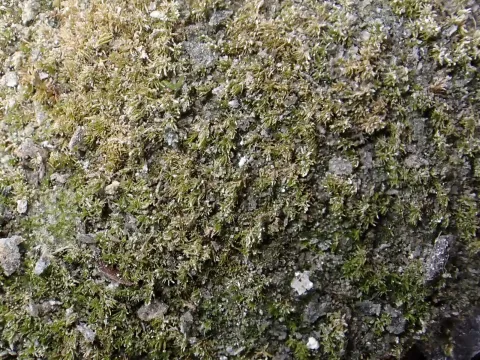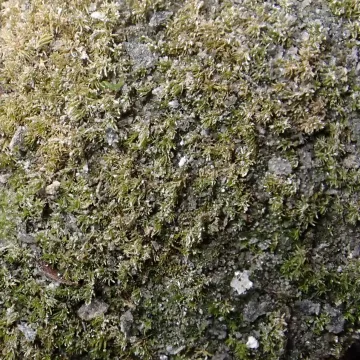
Didymodon glaucus
Didymodon glaucus
Description
Didymodon glaucus is a moss species belonging to the family Pottiaceae. While not an agricultural crop in the sense of production farming, it is a significant biological object in environmental science, known for its ability to adapt to extreme substrate conditions where other vegetation struggles to survive.
The species is indigenous to the Northern Hemisphere, where it thrives in open environments, particularly on calcareous rocks and well-drained alkaline soils. As a pioneer species, it is essential in stabilizing substrates and initiating the process of soil formation through organic matter accumulation.
Morphologically, this moss forms dense, glaucous-green cushions. Its stems are relatively short and characterized by lanceolate leaves that exhibit high physiological plasticity, allowing the plant to roll up during dry spells to minimize water loss through evaporation.
Regarding growing conditions, Didymodon glaucus requires exposure to light and alkaline substrates rich in calcium carbonates. In research settings, successful cultivation involves providing a mineral-heavy medium that mimics its natural limestone habitat, coupled with carefully managed moisture levels to prevent fungal competition.
Its хозяйственное use, or rather its functional utility, is primarily focused on environmental research. It serves as a bioindicator for substrate quality and has potential applications in the ecological restoration of sites affected by industrial activities or mineral extraction due to its tolerance for low-nutrient, high-pH soils.
- Primary colonizer on disturbed calcareous sites
- Potential use in ecological restoration projects
- Indicator species for high-calcium substrates
Photo gallery