Dieffenbachia seguine
Dieffenbachia seguine (Jacq.) Schott var. seguine
Description
Dieffenbachia seguine is a perennial herbaceous plant belonging to the Araceae family. Recognized primarily as an ornamental agricultural crop, it is widely propagated in the horticultural industry for its lush, variegated foliage, which makes it a staple for interior landscaping and commercial greenhouse production.
The species originates from the tropical regions of Central and South America and the West Indies. Its evolutionary history in rainforest environments dictates its specific ecological preferences, requiring consistently warm temperatures, high atmospheric humidity, and protection from extreme climatic variations to thrive in controlled environments.
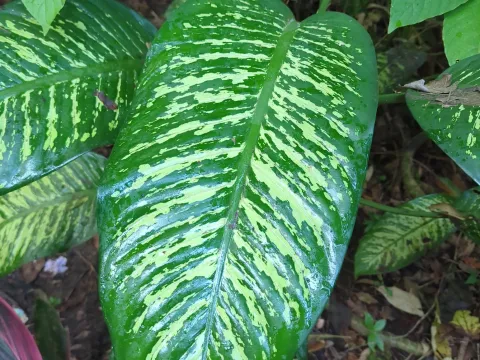
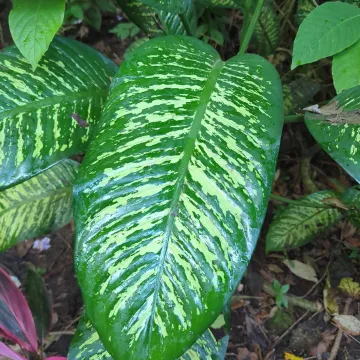
Botanically, the plant features a robust, upright stem that can become semi-woody over time. The large, elliptic leaves are adorned with unique patterns of cream or white spots, which vary depending on the specific cultivar. The root system is relatively shallow, necessitating substrates that provide both moisture retention and adequate oxygen circulation.
Agricultural practices for Dieffenbachia focus on replicating its natural habitat. The soil should be slightly acidic, well-draining, and rich in organic matter. Optimal cultivation involves indirect, bright light, as direct sun exposure often causes leaf scorch. Watering should be systematic, allowing the top layer of the soil to dry slightly between irrigation events to prevent root decay.
Regarding health management, the plant is susceptible to common greenhouse pests such as spider mites, aphids, and mealybugs. Pathological concerns mainly revolve around bacterial soft rot and various fungal leaf spot diseases, which typically manifest under conditions of poor ventilation or waterlogged soil. Proper hygiene and climate control are the primary methods for ensuring plant longevity.
Photo gallery