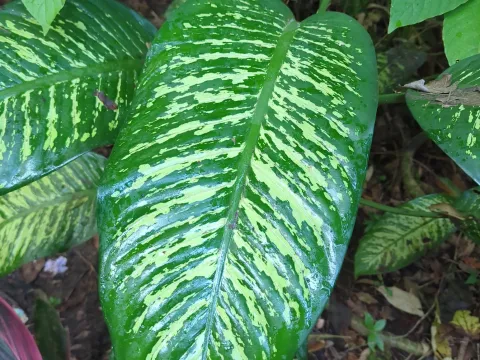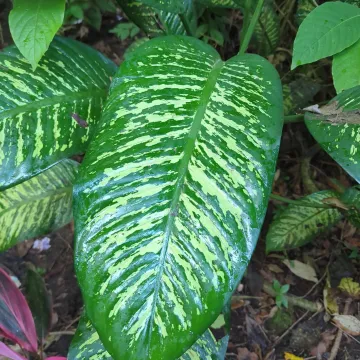
Dieffenbachia seguine
Dieffenbachia seguine (Jacq.) Schott
Description
Dieffenbachia seguine is a prominent perennial herbaceous plant species belonging to the Araceae family. Known for its lush, patterned foliage and structural elegance, it is widely recognized as a significant ornamental crop in international horticulture. The species is highly valued for its adaptability to container gardening and its role in improving interior air quality within diverse architectural settings.
The plant originates from the tropical regions of the Americas, specifically encompassing territories in South America and the Caribbean. Its natural habitat is characterized by humid forest understories, which necessitates specific environmental conditions when grown in agricultural settings. Commercial cultivation is conducted primarily in climate-controlled greenhouse facilities, which allow for the manipulation of light and humidity to match the plant's native requirements.
Botanically, the species features robust, succulent stems and large, oblong-lanceolate leaves that exhibit intricate variegation. The root system is fibrous and requires a well-structured, porous substrate to maintain oxygenation. It is essential to note that the plant tissues contain calcium oxalate crystals, a biological defense mechanism that necessitates careful handling by agricultural workers and consumers alike.
Successful agrotechnical management involves strict adherence to optimal growth conditions: temperatures should remain consistently between 18°C and 25°C, with protection from harsh, direct sunlight. The cultivation substrate must be slightly acidic and rich in organic matter to support vigorous development. Maintenance includes scheduled fertilization with balanced NPK formulations and consistent irrigation practices that prevent root rot while maintaining sufficient moisture levels.
The crop is susceptible to specific biological threats, including both abiotic and biotic factors. Common pests identified in commercial production include:
- Spider mites
- Mealybugs
- Scale insects
- Aphids
Photo gallery