Hoary tansyaster
Dieteria canescens
Description
Dieteria canescens, commonly known as the hoary tansyaster, belongs to the Asteraceae family. It is a biennial or short-lived perennial plant distinguished by its greyish-green foliage covered in fine, sticky hairs. The species has historically been taxonomically linked to the genus Machaeranthera, reflecting its close evolutionary relationship with other North American asters.
Native to the arid and semi-arid regions of Western North America, the plant is naturally adapted to harsh environments. Its geographical range extends from high-altitude plateaus to dry valley floors, thriving in habitats where other vegetation often fails. This evolutionary history makes it an excellent candidate for xeriscaping and reclamation projects in semi-desert climates.
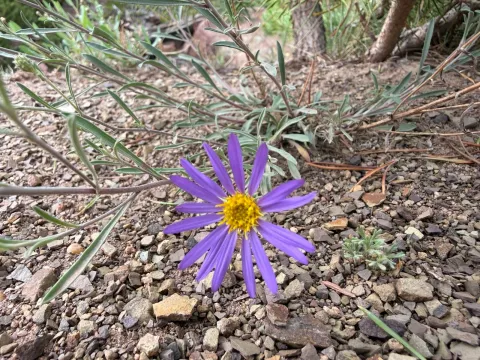
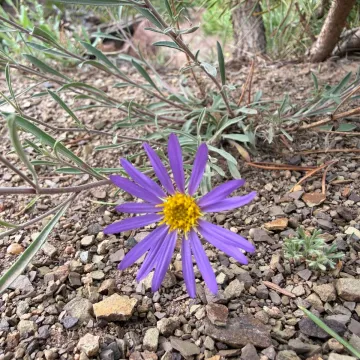
The botanical structure of the plant features branched stems reaching up to 80 centimeters, adorned with lanceolate leaves. The flowers are daisy-like heads with distinct purple-to-blue ray florets and yellow disk florets. Flowering typically occurs in late summer, providing a vital source of nectar during a period when many other meadow plants have already completed their life cycle.
Agronomically, Dieteria canescens requires full sun and exceptionally well-drained, porous soil. It is highly intolerant of waterlogged conditions and heavy clay soils, which promote root decay. In professional cultivation, the primary focus is on moisture management; the soil should be allowed to dry out significantly between watering intervals to maintain the plant's health and compact habit.
The economic and practical utility of the hoary tansyaster includes:
- Soil stabilization and erosion control on disturbed or arid sites.
- Supporting pollinator health by providing nectar for native bees and butterflies.
- Integration into low-water-use garden designs.
- Research into drought-resistant plant selection for marginal agricultural lands.
Regarding pest and disease management, the plant is relatively robust. However, aphids can occasionally infest the flower buds during periods of heat stress. Fungal infections, specifically root rot, are the primary agronomic concern and are almost exclusively caused by poor soil drainage. Maintaining airflow around the foliage and ensuring the planting medium remains loose are the best preventive strategies.
Photo gallery