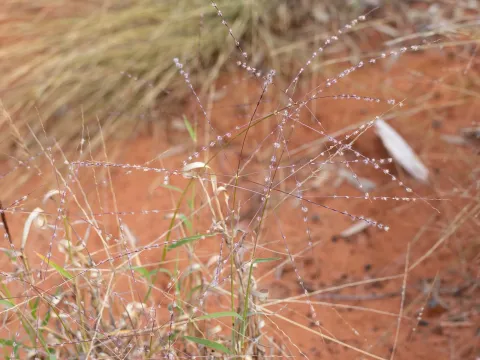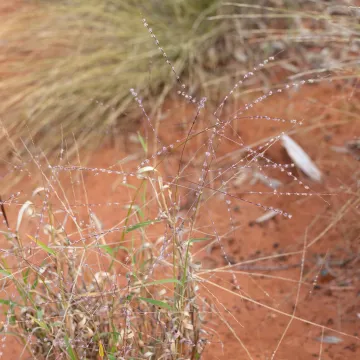
Digitaria ammophila
Digitaria ammophila
Description
Digitaria ammophila is a perennial grass species belonging to the Poaceae family. Known for its remarkable resilience, this crop is particularly noted for its ability to thrive in extremely poor, sandy substrates that are generally unsuitable for traditional agricultural crops, making it a valuable subject for research in land restoration.
The species originates from the arid regions of Australia, where it has adapted to survive in harsh environmental conditions. Its natural distribution is largely concentrated in open woodlands and sandy plains, where it acts as a pioneer species capable of colonizing unstable terrains under significant moisture stress.
Botanically, this grass features a deep and expansive root system that allows it to access subterranean moisture reserves during dry seasons. The stems are typically erect, and the foliage is covered with dense hairs that serve as a physiological mechanism to reduce water loss, enabling the plant to maintain metabolic activity in extreme heat.
Regarding agronomic requirements, Digitaria ammophila is considered a low-maintenance crop. It thrives on sandy soils with minimal nutrient content and does not respond well to high-input nitrogen fertilization. Proper management involves ensuring adequate solar radiation and well-drained soil, as the plant is highly sensitive to waterlogged conditions that can cause root decay.
Primary agricultural and ecological uses include:
- Soil stabilization and erosion control in sandy regions.
- Utilization as a supplemental pasture grass in drought-prone areas.
- Ecological restoration projects to improve habitat biodiversity.
The crop is occasionally susceptible to fungal diseases such as rusts during periods of high humidity or poor ventilation. Common pests include various lepidopteran larvae and aphids that target the succulent foliage. Effective management strategy relies on rotational grazing to prevent overgrazing, which allows the plant to maintain its vigor and reproductive capacity throughout the season.
Photo gallery