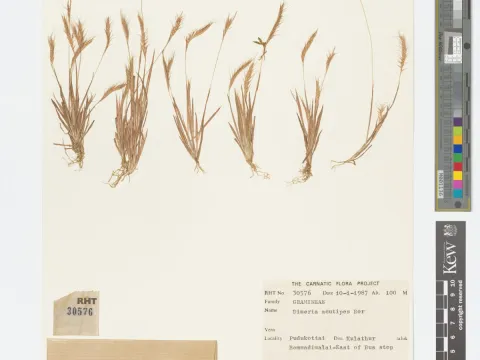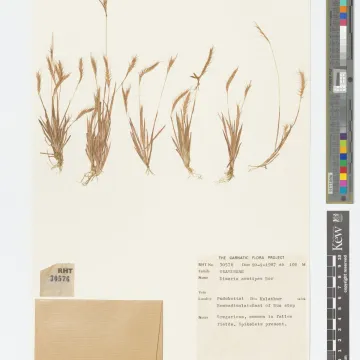
Dimeria acutipes
Dimeria acutipes
Description
Dimeria acutipes is a species of grass within the Poaceae family. In agricultural and botanical contexts, it is classified as a specialized graminoid that plays a functional role in local ecosystems and serves as a natural forage resource in its native habitats.
The origin of this species is traced to the tropical regions of Asia. Its natural distribution is largely concentrated in areas with monsoonal climates, where the plant thrives in grasslands and clearings, often appearing on soils that undergo seasonal fluctuations in moisture content.
Botanically, Dimeria acutipes is characterized by its slender, erect stems and distinct spike-like inflorescences. The plant's morphology is highly specialized for seed dispersal and survival in competitive grassland environments, where it competes effectively for light and soil nutrients.
The environmental requirements for this plant focus on consistent thermal conditions and moisture availability. While it is not traditionally cultivated in intensive industrial agriculture, it performs exceptionally well in semi-managed pastures where nitrogen availability is adequate to support active vegetative growth.
The primary agricultural use of this plant is as fodder for livestock. It is valued for its ability to provide high-quality grazing material, particularly in regions where other forage crops might struggle with soil saturation or specific pest pressures common in tropical zones.
- Excellent tolerance to seasonal soil saturation.
- Strong regenerative capacity after grazing.
- Adaptive to various tropical soil types.
- Resistance to common foliage-feeding insects.
Photo gallery