Dioon edule
Dioon edule
Description
Dioon edule is a remarkable perennial cycad belonging to the Zamiaceae family. Often referred to as the virgin's palm, this species is a living fossil that dates back to the Mesozoic era. Its slow-growing nature and rigid, feathery foliage make it a highly sought-after plant for xeriscaping and botanical collections worldwide, offering a prehistoric aesthetic to any landscape.
The plant is native to the dry tropical forests and rocky slopes of Mexico. In its natural range, Dioon edule thrives in well-drained, limestone-rich soils under harsh sun. Due to its adaptability, it is currently cultivated in many subtropical and tropical regions globally. In cooler climates, it is grown as a container plant, providing a stunning structural focal point for greenhouses or indoor gardens.
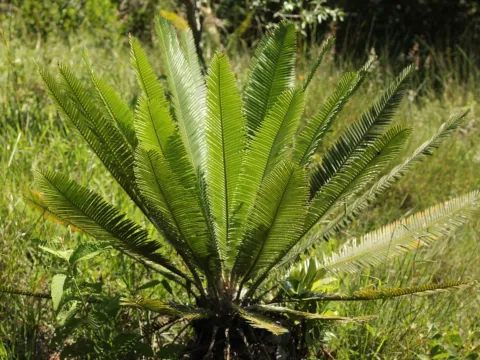
Botanically, Dioon edule features a stout, cylindrical trunk topped with a crown of stiff, glaucous-green leaflets. It is a dioecious plant, producing distinct male and female cones during its reproductive cycle. A unique feature is its coralloid roots, which form symbiotic relationships with nitrogen-fixing bacteria, allowing the plant to flourish in nutrient-poor environments where other species might struggle.
Success in cultivating this species depends on replicating its native arid environment. Key requirements include excellent drainage to prevent root rot and significant exposure to sunlight. The soil should be gritty and inorganic, mimicking its natural rocky habitat. Irrigation must be strictly controlled, ensuring the growing medium dries out completely between waterings, especially during the dormant winter period.
Historically, the seeds of Dioon edule were processed for their starch content, serving as a food source in indigenous Mexican communities. However, they contain toxic compounds that must be removed through meticulous preparation. Today, the plant's use is almost exclusively ornamental. Common threats to its health include scale insects and mealybugs, as well as fungal issues caused by excessive humidity or poor soil aeration.
- Light requirement: Full sun to partial shade.
- Soil type: Sandy, rocky, well-draining mix.
- Hardiness: Moderately drought-tolerant.
- Common pests: Scale, mealybugs.
Photo gallery