Dissotis debilis
Dissotis debilis
Description
Dissotis debilis is a perennial herbaceous plant belonging to the Melastomataceae family. Known for its aesthetic appeal and specific botanical structure, this species represents a significant member of the tropical African flora, often studied for its adaptive mechanisms within savannah ecosystems.
The native range of this species covers tropical Africa, primarily found in moist grasslands and forest fringes. The plant is well-adapted to warm, stable climates, which makes it highly sensitive to temperature drops if cultivated outside its natural geographical habitat or controlled greenhouse conditions.
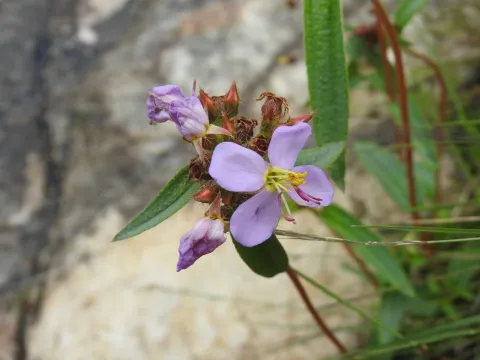
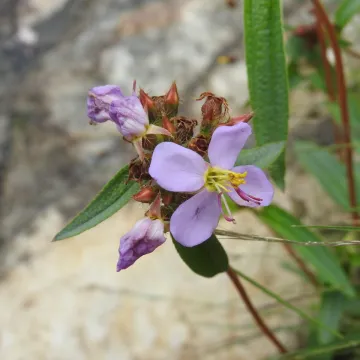
Botanically, Dissotis debilis is distinguished by slender, delicate stems and distinctively veined leaves typical of the Melastomataceae family. The flowers are generally purple, displaying the complex floral morphology that characterizes the genus. The plant typically reaches a compact height, making it suitable for specialized horticultural applications.
Successful cultivation requires specific soil conditions, ideally well-drained and slightly acidic, rich in organic matter to mimic the forest soil environment. Proper irrigation management is critical, as the roots are sensitive to waterlogging, which often leads to root rot in poorly aerated potting substrates.
- High humidity levels are preferred for optimal growth.
- Bright, indirect light promotes more robust flowering cycles.
- Periodic monitoring for common pests like spider mites is essential.
While primarily cultivated for ornamental purposes, Dissotis debilis remains a subject of interest in plant science due to its unique genetic traits and role in biodiversity conservation. Its agronomic use is mostly confined to boutique nurseries and scientific research, where its growth cycles are managed under strict climate control.
Photo gallery